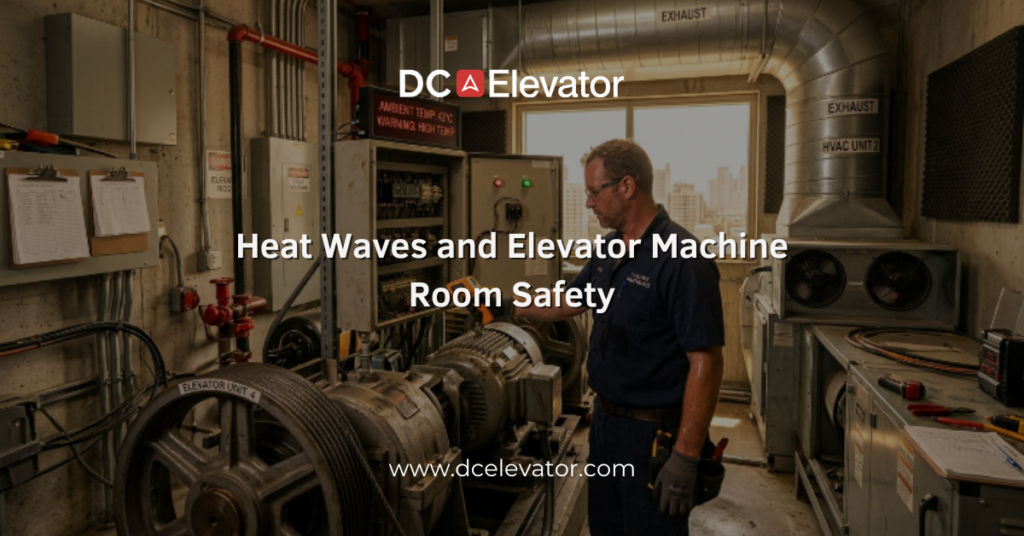
When summer temperatures rise, most people focus on keeping building occupants comfortable. However, one area that often gets overlooked is the elevator machine room. During heat waves, these spaces can quickly become excessively hot, placing serious strain on elevator equipment and increasing the risk of operational issues.
Elevator machine rooms contain critical components responsible for keeping systems running safely and efficiently. Without proper ventilation and temperature control, heat buildup can affect electrical systems, motors, and controllers—leading to shutdowns, reduced performance, and costly repairs. For property managers and facility teams, understanding how extreme heat affects elevator systems is especially important during the summer months when buildings often experience higher traffic and increased energy demands. Preventive attention before and during heat waves can help maintain reliable elevator performance and reduce unexpected service interruptions.
Why Machine Room Temperatures Matter
Elevator machine rooms house important mechanical and electrical equipment that must operate within specific temperature ranges. During heat waves, poor airflow or inadequate cooling can cause temperatures to rise beyond recommended limits.
Excessive heat can impact:
- Elevator controllers
- Electrical wiring and connections
- Motors and drive systems
- Brake components
- Communication equipment
When machine room temperatures become too high, elevator systems may automatically shut down as a safety precaution. In busy buildings, this can create major inconvenience for tenants, visitors, and facility staff.
Common Signs of Heat-Related Elevator Problems
Heat-related issues often begin gradually before developing into larger operational problems. Property managers may notice:
- Slower elevator response times
- Intermittent shutdowns
- Error messages or fault codes
- Unusual noises from equipment
- Increased service calls during hot weather
In some cases, elevators may function normally during cooler morning hours but experience problems later in the day as machine room temperatures rise.
Older buildings are particularly vulnerable because aging ventilation systems may struggle to keep equipment areas properly cooled during extended heat waves.
Ventilation Plays a Critical Role
Proper ventilation is one of the most important factors in protecting elevator machine rooms during summer months. Without consistent airflow, heat becomes trapped around sensitive equipment.
Machine room ventilation systems should be inspected regularly to ensure:
- Air conditioning systems are functioning properly
- Ventilation fans are operational
- Air filters are clean
- Vents are unobstructed
- Room temperatures remain within recommended limits
Even small airflow restrictions can reduce cooling efficiency during extreme weather conditions.
Facility teams should also monitor whether nearby building systems generate additional heat that could affect the machine room environment.
Increased Summer Usage Adds More Stress
Heat waves often occur during periods of increased building activity. Hotels, office buildings, residential properties, and healthcare facilities may all experience heavier elevator usage during summer months.
Higher traffic means elevator systems work harder and generate additional heat internally. When combined with already elevated machine room temperatures, equipment wear can accelerate more quickly.
Frequent use during hot weather may contribute to:
- Faster component wear
- Overheated motors
- Reduced equipment lifespan
- More frequent maintenance needs
Preventive inspections before peak summer temperatures arrive can help identify issues early and reduce the risk of emergency breakdowns.
Preventive Maintenance Helps Reduce Downtime
One of the most effective ways to protect elevator systems during heat waves is through proactive maintenance planning. Routine inspections allow technicians to identify ventilation concerns, overheating risks, and worn components before they lead to system failures.
A summer readiness inspection may include:
- Checking machine room temperature levels
- Inspecting cooling and ventilation systems
- Testing elevator performance under heavy usage
- Examining electrical components for heat stress
- Verifying proper airflow around equipment
Taking preventive action can help buildings avoid unexpected outages during the hottest periods of the year.
Heat waves place additional strain on elevator machine rooms and the equipment they contain. Without proper ventilation, cooling, and maintenance, rising temperatures can lead to shutdowns, increased wear, and costly operational disruptions.
For property managers and building owners, summer preparation is an important part of maintaining safe and reliable elevator performance. Addressing ventilation concerns early and scheduling seasonal inspections can help reduce risks before extreme temperatures arrive.
If your building’s elevator machine room may be vulnerable to excessive heat, our team can help assess system conditions and recommend practical solutions to improve reliability during the summer months. Contact us today to schedule an elevator system evaluation and help prepare your equipment for peak heat conditions.