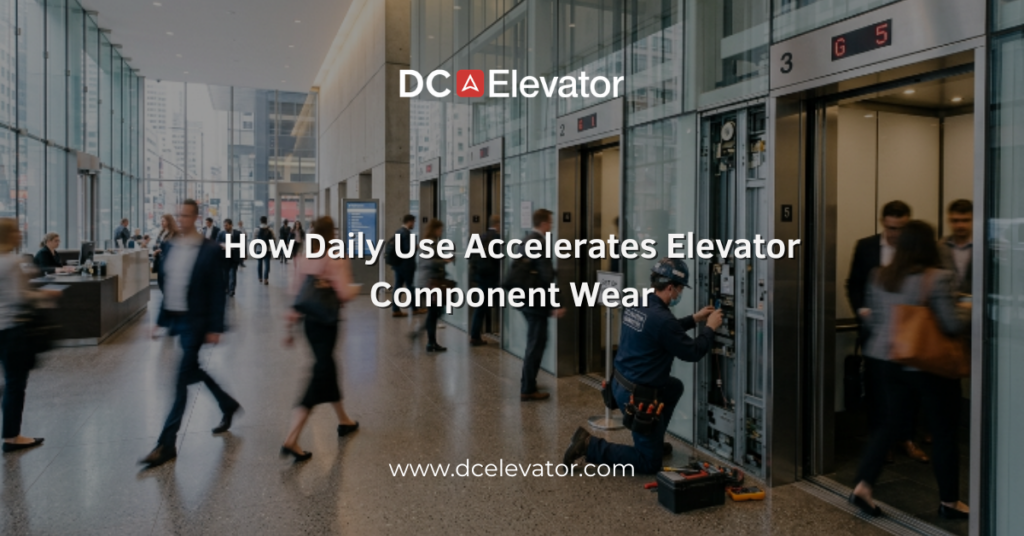
How often do your building’s elevators run each day? In high-traffic properties like offices, apartments, hospitals, and hotels, elevators can complete hundreds—or even thousands—of trips daily. While these systems are designed for frequent use, constant operation naturally leads to gradual wear and tear.
For facility managers and property owners, understanding how increased daily usage affects elevator components is key to maintaining performance and avoiding unexpected downtime. What may start as minor wear can quickly develop into larger mechanical or operational issues if not addressed early. By recognizing the impact of usage patterns, you can take proactive steps to extend equipment life, improve reliability, and ensure a smooth experience for everyone who depends on your elevators.
The Reality of High-Cycle Operation
Every elevator component has a lifecycle, often measured in cycles—each trip up and down counts as one. In buildings with heavy foot traffic, components reach these cycle limits much faster than expected.
For example, an elevator in a low-rise office may experience moderate use, while one in a busy residential tower or healthcare facility operates almost continuously. This difference significantly impacts how quickly parts like door systems, cables, and motors begin to wear down.
Without adjusting maintenance schedules to match real usage, systems can fall behind in upkeep, increasing the risk of breakdowns.
Door Systems: The First to Show Wear
Elevator doors are among the hardest-working components in the system. Opening and closing hundreds of times per day puts constant strain on rollers, tracks, and operators.
With increased daily usage, common issues include:
-
Slower opening and closing speeds
-
Misaligned doors
-
Unusual noises or hesitation
These problems are often early indicators of wear. Left unaddressed, they can lead to door failures—one of the most common causes of elevator service calls.
Routine inspections, cleaning, and timely part replacements can help keep door systems operating efficiently.
Mechanical Components Under Stress
Beyond doors, core mechanical components such as hoist ropes, sheaves, and guide rails are also affected by continuous use. Over time, friction and load cycles contribute to gradual degradation.
In high-use environments, this can result in:
-
Reduced ride smoothness
-
Increased vibration or noise
-
Uneven wear on critical parts
For example, a building experiencing heavier-than-expected occupancy may notice ride quality issues sooner than anticipated. These changes may seem minor at first but can impact passenger comfort and system reliability.
Regular performance checks and adjustments can help identify wear patterns before they lead to major repairs.
Electrical Systems and Control Components
Frequent operation also impacts electrical systems, including relays, wiring connections, and control boards. Each trip requires communication between multiple components, and over time, repeated use can lead to sensitivity or intermittent faults.
Increased usage may cause:
-
More frequent resets or minor faults
-
Delayed response times
-
Inconsistent floor leveling
These issues are often subtle but can become more noticeable during peak traffic periods. Addressing them early through diagnostics and system evaluations can prevent unexpected outages.
Adapting Maintenance to Usage Levels
One of the most common challenges for property managers is relying on fixed maintenance schedules that don’t reflect actual usage. Elevators in high-traffic buildings require more frequent attention than those in lower-use environments.
A proactive approach includes:
-
Adjusting service intervals based on usage data
-
Conducting detailed inspections of high-wear components
-
Planning ahead for part replacements before failure occurs
This strategy not only reduces downtime but also helps manage long-term costs by avoiding emergency repairs.
Increased daily usage is one of the biggest factors influencing elevator wear and performance. From door systems to mechanical and electrical components, every part of the system is affected by how often it operates.
By understanding these patterns and taking a proactive approach to maintenance, building owners and facility managers can extend equipment lifespan, improve reliability, and reduce disruptions.
If your building is experiencing higher traffic or your elevators are showing early signs of wear, it may be time for a professional evaluation. Our team can assess your system, identify high-wear components, and recommend practical solutions to keep your elevators running smoothly. Contact us today to schedule a comprehensive elevator assessment.