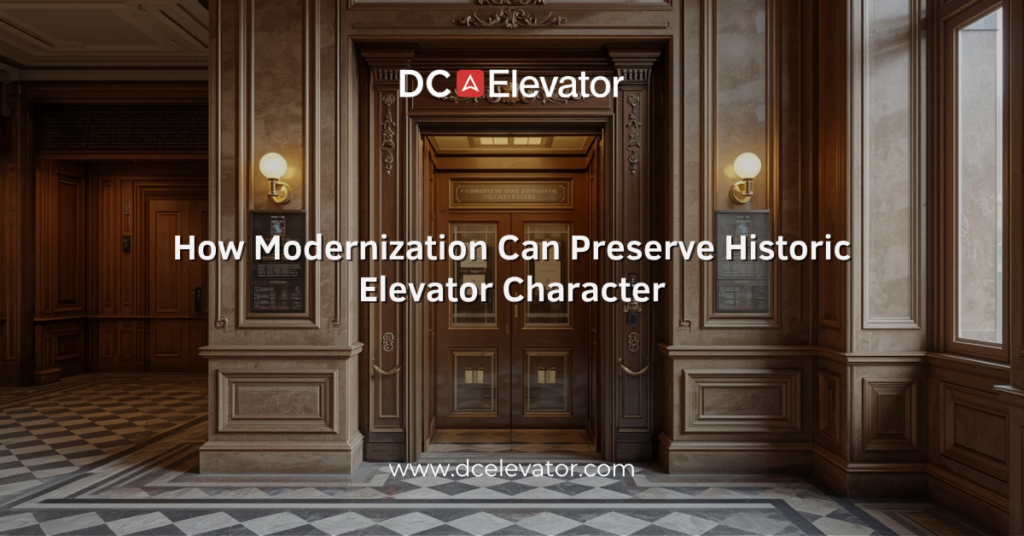
How can an older building keep its historic character while meeting the expectations of a modern property? For owners and facility managers of historic buildings, this can be a difficult balance. Elevators are essential for accessibility and everyday building operations, but replacing outdated equipment does not necessarily mean losing the architectural character that makes a building distinctive.
Historic hotels, office buildings, apartment buildings, theaters, and other properties often feature elevator cabs, doors, fixtures, and finishes that contribute to the overall appearance of the building. At the same time, the equipment behind those features can become outdated, difficult to maintain, or less efficient. Elevator modernization offers a way to address aging equipment while carefully preserving important visual elements. With thoughtful planning, modernization can improve elevator performance without compromising the character of a historic property.
Why Historic Elevators Present Unique Challenges
Modernizing an elevator in a historic building requires more consideration than simply replacing aging equipment. The elevator may include original or period-inspired doors, decorative panels, lighting, fixtures, or finishes that property owners want to preserve.
Building managers may also face limitations related to the existing shaft, machine room, cab dimensions, or surrounding architectural features. In some cases, extensive changes could affect historically significant areas of the property.
This makes planning especially important. Before modernization begins, property owners should understand which components are essential to current elevator operation and which visible elements can potentially remain.
Modernizing the Equipment Behind the Scenes
One of the advantages of modernization is that it can focus on aging mechanical and control components while retaining selected elements that contribute to the building’s historic appearance.
Depending on the elevator’s design and condition, modernization may involve updating controls, door equipment, machinery, or other components that have reached the end of their useful service life. The specific scope should be determined through an evaluation of the existing system and the building’s operational requirements.
For example, an older elevator cab may have decorative finishes that remain in good condition while the equipment operating behind the scenes has become increasingly difficult to maintain. In that situation, preserving the cab while addressing outdated equipment may provide a practical balance between preservation and performance.
Working With Historic Design Considerations
Historic preservation often requires attention to details that might be overlooked in a standard modernization project. Finishes, materials, fixtures, colors, and proportions can all influence the appearance of an elevator.
Property owners should identify important architectural features early in the planning process. Working with elevator professionals and, when necessary, preservation specialists can help ensure that modernization plans account for these considerations.
The goal is not necessarily to make an older elevator look brand new. Instead, modernization can be approached as an opportunity to improve the system while respecting the design language and history of the building.
Planning for Long-Term Performance
Historic character is valuable, but the elevator also needs to provide dependable service for today’s occupants and visitors. An aging system that experiences frequent shutdowns, increasing repair needs, or difficulty sourcing replacement components may eventually become a larger operational concern.
A professional elevator evaluation can help property owners understand the condition of existing equipment and determine which improvements may be appropriate. Modernization can then be planned around the building’s needs, budget, usage, and architectural considerations.
Conclusion & Call to Action
Modernizing an elevator in a historic building does not have to mean sacrificing the features that make the property unique. With careful planning, property owners can address aging equipment and improve reliability while preserving important elements such as decorative elevator cabs, doors, fixtures, and finishes.
The key is to evaluate the elevator as a complete system and determine which components require attention and which historic features can be retained. A thoughtful modernization plan can help extend the useful life of the elevator while supporting the building’s long-term needs.
If you manage a historic property with an aging elevator, our experts can evaluate the existing system and help identify modernization options that balance performance with the building’s character. Contact us today for an elevator analysis and take the first step toward a modernization plan designed for your property.