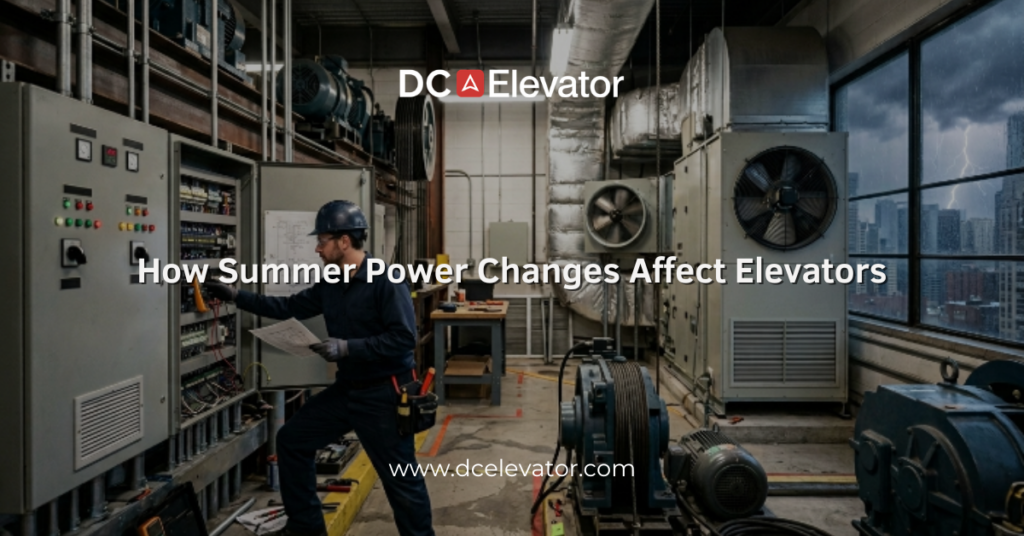
Have you ever noticed lights flicker or building systems slow down during the hottest months of the year? Summer often brings increased electrical demand as air conditioning systems run longer and storms become more frequent. While many property owners focus on cooling systems and backup generators, elevator performance can also be heavily affected by seasonal power fluctuations.
For facility managers, property owners, and building operators, understanding how unstable power impacts elevator systems is essential for maintaining safe and reliable operation. Sudden voltage drops, power surges, and electrical interruptions can place extra stress on elevator components, leading to shutdowns, service disruptions, and costly repairs. Preparing elevator systems for these conditions before peak summer demand can help reduce downtime and improve building reliability during one of the busiest times of the year.
What Causes Summer Power Fluctuations?
During summer, electrical grids often experience higher demand due to increased cooling usage in residential, commercial, and industrial buildings. Severe weather events such as thunderstorms can also create sudden interruptions or voltage instability.
These fluctuations may include:
- Brief power outages
- Voltage spikes
- Low-voltage conditions
- Rapid power cycling after outages
- Electrical surges from storms
While some fluctuations may seem minor, elevators rely on sensitive electrical and mechanical systems that require stable power to operate correctly.
How Power Issues Affect Elevator Systems
Controller and Circuit Board Stress
Elevator controllers act as the “brain” of the system, coordinating movement, door operation, and safety functions. Power surges or inconsistent voltage can damage sensitive electronics or cause system errors.
In some cases, elevators may shut down temporarily as a protective measure. Repeated electrical stress over time can shorten the lifespan of control components and increase maintenance needs.
Unexpected Shutdowns and Faults
Voltage drops can interfere with normal elevator operation, especially during periods of heavy building usage. Elevators may experience:
- Sudden stops
- Door malfunctions
- Delayed response times
- Error codes requiring technician resets
These disruptions can frustrate tenants, guests, and building occupants, particularly in hotels, offices, healthcare facilities, and residential buildings during busy summer periods.
Increased Wear on Motors and Drives
Elevator motors depend on consistent electrical supply for smooth performance. Fluctuating power levels can cause motors to work harder than intended, generating excess heat and mechanical strain.
Over time, this added stress may contribute to overheating, reduced efficiency, or premature component wear.
Common Signs of Power-Related Elevator Problems
Facility managers should watch for warning signs that may indicate power quality issues affecting the elevator system, including:
- Frequent elevator resets
- Random shutdowns after storms
- Flickering cab lights
- Delayed door operation
- Unusual noises during travel
- Increased service calls during hot weather
Ignoring these early signs can lead to more serious operational problems later in the season.
Preventive Steps Building Owners Can Take
Schedule Seasonal Elevator Inspections
A professional inspection before peak summer demand can help identify vulnerable electrical components, loose connections, or aging equipment that may be sensitive to power instability.
Routine inspections also allow technicians to verify that safety systems are functioning properly after storms or outages.
Evaluate Machine Room Conditions
Elevator machine rooms can become extremely hot during summer months, especially when combined with electrical stress from fluctuating power. Poor ventilation can increase the risk of overheating and equipment failure.
Ensuring proper airflow and cooling helps protect motors, controllers, and other sensitive components.
Review Backup Power Systems
Buildings equipped with emergency generators should confirm that elevators integrate properly with backup systems. Testing emergency operation procedures can help reduce confusion and downtime during outages.
Consider Modernization for Aging Systems
Older elevator systems are often more vulnerable to electrical instability because outdated components may lack modern protective features. In some cases, modernization upgrades can improve system reliability and help elevators better handle seasonal power challenges.
Summer power fluctuations can place significant strain on elevator systems, especially in busy commercial and residential buildings. From unexpected shutdowns to overheating components, unstable power conditions can quickly impact reliability, safety, and tenant satisfaction.
By taking a proactive approach through inspections, proper ventilation, and system evaluations, property managers can reduce the risk of costly disruptions during the hottest months of the year. If your elevator system has experienced recent shutdowns, electrical faults, or inconsistent performance, now is the ideal time to schedule a professional elevator assessment. Our team can help identify potential issues and recommend practical solutions to keep your elevators operating safely and efficiently throughout the summer season.