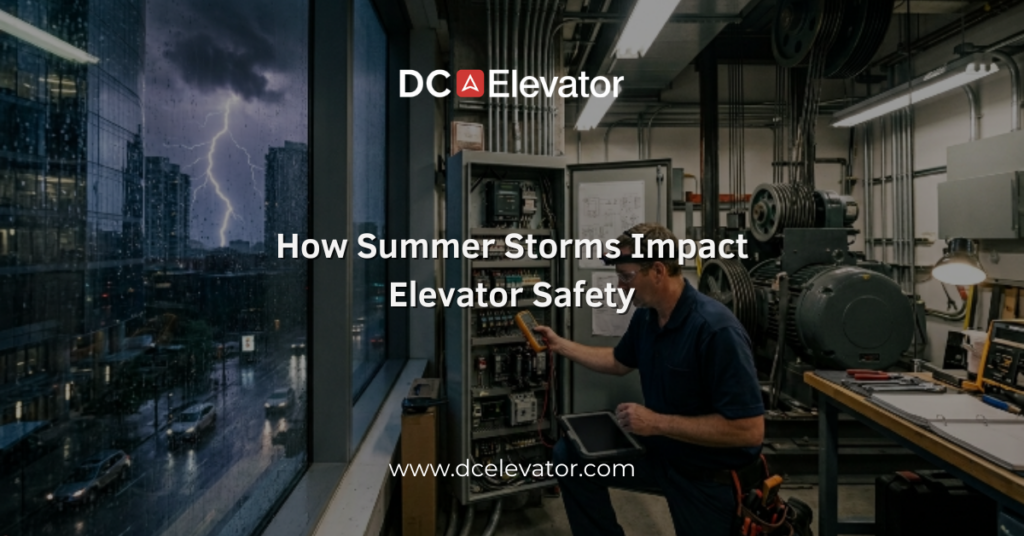
Have you ever noticed elevators behaving differently during a heavy summer storm? Sudden shutdowns, delayed responses, or unusual operation during severe weather are more common than many building owners realize. Summer storms bring intense rain, lightning, humidity, and power fluctuations that can directly affect elevator systems and overall building safety.
For property managers and facility teams, understanding how storms impact elevators is critical to reducing downtime and protecting tenants. Elevators are complex systems that rely on electrical components, communication systems, and safe operating environments. When severe weather strikes, even minor vulnerabilities can quickly become operational issues. Preparing ahead of storm season helps buildings maintain safer, more reliable elevator performance while minimizing disruptions during periods of extreme weather.
Power Interruptions and Elevator Shutdowns
One of the most common storm-related elevator issues is sudden power loss. Summer storms often cause utility interruptions, voltage fluctuations, or brief outages that can stop elevators between floors or temporarily take systems offline.
Modern elevators are designed with safety features that respond to power loss, but repeated interruptions can still create operational stress. In busy commercial or residential buildings, even short shutdowns may lead to tenant frustration, delays, and emergency service calls.
Facility managers should ensure backup power systems, emergency lighting, and communication devices are regularly inspected before storm season begins. Routine testing helps confirm elevators can respond safely during unexpected outages.
Water Intrusion and Flooding Risks
Heavy rain can create serious risks for elevator equipment, especially in basements or lower-level machine rooms. Water entering elevator pits or electrical areas can damage sensitive components and create hazardous conditions.
Common storm-related water issues include:
- Flooded elevator pits
- Moisture entering machine rooms
- Corrosion of electrical components
- Damage to wiring or control panels
Even small amounts of moisture can affect elevator reliability over time. Buildings with older drainage systems or poor waterproofing may be especially vulnerable during strong summer storms.
Preventive inspections can help identify leaks, drainage concerns, or vulnerable areas before weather conditions worsen.
Lightning and Electrical Component Damage
Lightning strikes and electrical surges can impact elevator systems even when a building is not directly hit. Sudden voltage spikes may damage controllers, circuit boards, or communication systems connected to the elevator.
In some cases, electrical damage may not cause immediate failure but can weaken components over time, leading to future malfunctions or intermittent operational problems.
Surge protection systems and regular inspections of electrical equipment can help reduce the risk of weather-related damage. Property managers should also verify that emergency communication systems remain operational after severe storms.
Increased Humidity and Equipment Stress
Summer storms also bring higher humidity levels, which can affect elevator performance in less obvious ways. Moisture buildup inside machine rooms or control cabinets may contribute to corrosion, condensation, and reduced reliability of electronic components.
Buildings in humid climates often experience:
- Sensor malfunctions
- Door operation issues
- Reduced efficiency of electrical systems
- Increased wear on sensitive equipment
Proper machine room ventilation and climate control are important during storm season to help maintain stable operating conditions.
Emergency Preparedness for Building Safety
Storm preparedness is not only about protecting equipment—it is also about protecting building occupants. Clear emergency procedures help reduce confusion during outages or severe weather events.
Property managers should consider:
- Posting elevator safety instructions during storms
- Ensuring emergency phones function properly
- Coordinating with elevator service providers before peak storm season
- Training staff on outage response procedures
A proactive approach helps buildings respond more effectively when severe weather impacts daily operations.
Summer storms can create a wide range of elevator challenges, from power disruptions and flooding to humidity-related equipment issues. While many of these risks develop gradually, severe weather often exposes existing vulnerabilities within elevator systems.
By preparing ahead of storm season, property managers can reduce downtime, improve safety, and protect critical elevator equipment from costly damage. Preventive inspections and routine maintenance play an important role in keeping systems reliable during unpredictable weather conditions.
If your building’s elevators have experienced storm-related issues or you want to prepare before severe weather arrives, our team can help evaluate your system and recommend practical solutions for safer, more reliable performance. Contact us today to schedule an elevator system assessment before peak storm season begins.