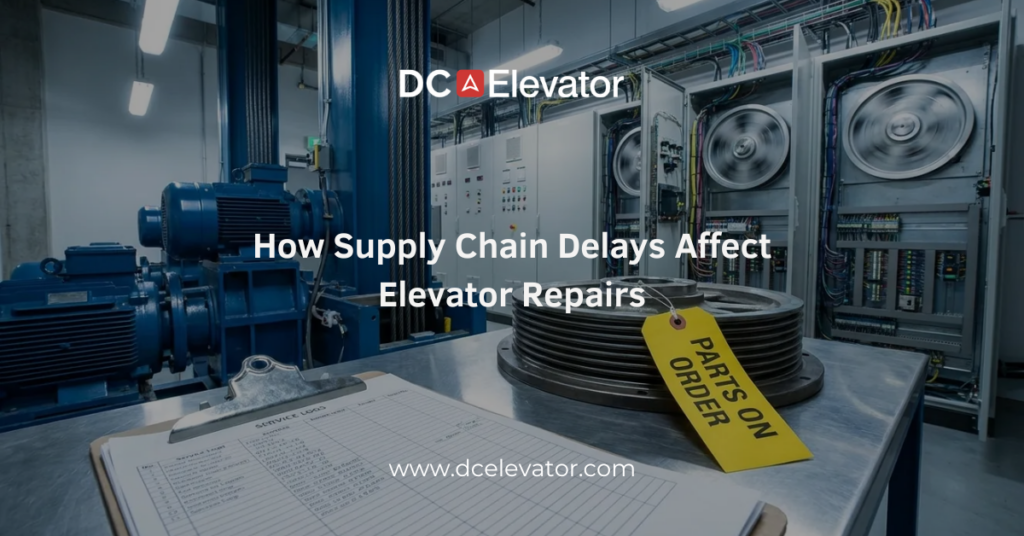
Have you ever scheduled an elevator repair only to be told the fix will take weeks—or even months—due to parts availability? You’re not alone. In recent years, supply chain disruptions have significantly impacted the availability of elevator components, extending repair timelines and frustrating building occupants.
For facility managers, property owners, and operations teams, understanding how parts delays affect elevator service is critical for planning and risk management. While some delays are unavoidable, proactive strategies can reduce downtime and keep your equipment running reliably. Knowing what to expect—and how to prepare—can make the difference between a minor inconvenience and a major operational disruption.
Why Elevator Parts Delays Are Increasing
Global Manufacturing and Shipping Challenges
Many elevator components are manufactured through complex global supply networks. When production slows or shipping lanes become congested, replacement parts can take significantly longer to arrive.
Common factors include:
-
Limited manufacturing capacity
-
Extended shipping times
-
Backorders on specialized components
-
Increased demand for modernization parts
These issues particularly affect older elevators that rely on discontinued or hard-to-source components.
Aging Equipment Complicates Repairs
Buildings with aging elevator systems often face the longest delays. As equipment becomes obsolete, replacement parts may no longer be readily stocked, requiring custom fabrication or extended sourcing efforts.
Facility managers frequently encounter:
-
Controller components no longer in production
-
Door equipment with limited availability
-
Specialty relays or boards on backorder
-
Increased costs for rush or custom parts
In many cases, what appears to be a simple repair becomes a longer project due to sourcing challenges.
How Delays Impact Building Operations
Extended Downtime and Tenant Frustration
When critical parts are unavailable, elevators may remain out of service longer than expected. This can lead to:
-
Reduced tenant satisfaction
-
Accessibility concerns
-
Increased wear on remaining elevators
-
Higher service call volume
For high-traffic buildings, even one elevator offline can significantly disrupt daily operations.
Budget and Planning Uncertainty
Supply delays can also affect financial planning. Unexpected lead times may require temporary solutions, additional service visits, or revised project schedules.
Without proper planning, building teams may face:
-
Unplanned downtime costs
-
Emergency repair premiums
-
Schedule disruptions for capital projects
-
Increased pressure from occupants
Practical Strategies to Reduce Risk
Maintain Proactive Preventive Maintenance
Routine maintenance helps identify worn components early—before they fail completely. This provides valuable lead time to source parts while the elevator remains operational.
Plan Modernization Before Parts Become Obsolete
If your system relies on aging equipment, modernization planning can reduce dependence on hard-to-find components and improve long-term reliability.
Work With a Responsive Service Partner
An experienced elevator service provider can help monitor parts availability, recommend alternatives when appropriate, and plan repairs strategically to minimize disruption.
Keep Critical Spares When Possible
For high-use buildings, maintaining select spare components can shorten repair timelines during unexpected failures.
Supply chain delays have become a real factor in elevator maintenance and repair planning. Buildings with aging equipment or reactive maintenance strategies are especially vulnerable to extended downtime. The good news is that proactive planning, strong documentation, and the right service partnership can significantly reduce risk.
If your building has experienced repeated repair delays—or you’re concerned about parts availability—our team can evaluate your system and help you develop a proactive maintenance and upgrade strategy. Contact us today for an elevator system review and keep your equipment running with confidence.