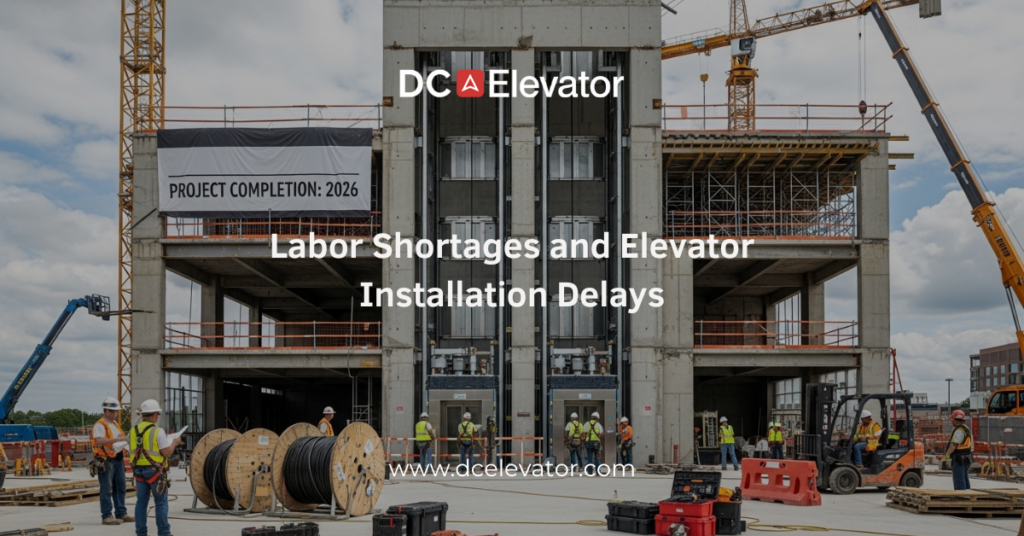
Have you noticed construction timelines stretching longer than expected? Across the building industry, labor shortages are becoming a major factor affecting project schedules—including elevator installations. For property owners, developers, and facility managers, these delays can impact tenant move-ins, occupancy goals, and overall project budgets.
Elevator installation is a specialized process that requires skilled coordination between trades. When qualified labor is limited, even well-planned projects can experience setbacks. Understanding how workforce shortages affect elevator timelines helps building decision-makers plan more effectively, reduce risk, and keep projects moving forward.
How Labor Shortages Affect Elevator Projects
Specialized Skills Are in High Demand
Elevator installation is not a general construction task. It requires trained professionals who understand hoistway alignment, mechanical assembly, electrical integration, and safety compliance. As experienced workers retire and fewer new technicians enter the field, the talent pool becomes tighter.
This can lead to:
-
Longer scheduling lead times
-
Limited crew availability
-
Extended installation windows
-
Increased project coordination challenges
For building owners, this often means elevator work becomes a critical path item in construction schedules.
Project Timelines Become Less Predictable
When labor availability fluctuates, project timelines can shift unexpectedly. Even if equipment arrives on schedule, installation may be delayed while waiting for qualified crews.
Common ripple effects include:
-
Delayed building openings
-
Extended temporary access solutions
-
Higher carrying costs for developers
-
Frustration among tenants and stakeholders
In multi-story buildings, elevator readiness is often essential for final occupancy approvals, making these delays especially impactful.
Real-World Challenges for Building Owners
Coordination Between Trades
Elevator installation depends heavily on the readiness of other construction elements, including structural work, electrical rough-ins, and machine room preparation. When labor shortages affect any trade, it can create a domino effect.
Facility managers and developers may encounter:
-
Missed installation windows
-
Re-sequencing of project phases
-
Increased change orders
-
Communication gaps between teams
Strong project management becomes critical in these situations.
Cost Pressures and Budget Adjustments
Labor constraints can also influence project costs. Overtime, rescheduling, and extended project durations may increase overall expenses. While not always dramatic, these incremental costs can add up—especially on large developments.
Planning ahead and working with experienced partners helps minimize these financial surprises.
Strategies to Reduce Installation Risk
Engage Elevator Experts Early
One of the most effective ways to avoid delays is early coordination. Bringing elevator professionals into the planning phase allows teams to:
-
Identify potential scheduling conflicts
-
Confirm equipment lead times
-
Align construction milestones
-
Flag site readiness requirements
Early planning creates flexibility when labor markets tighten.
Prioritize Clear Project Documentation
Accurate drawings, specifications, and site readiness checklists help installation teams work efficiently when they arrive. Well-prepared projects reduce wasted time and help crews stay on schedule.
Work With a Well-Resourced Service Partner
Elevator providers with strong workforce planning, cross-trained teams, and established processes are better positioned to navigate labor fluctuations. Consistent communication and proactive scheduling can make a significant difference in project outcomes.
Construction labor shortages are reshaping project timelines across the industry, and elevator installations are no exception. By understanding the risks and planning proactively, building owners and facility managers can minimize delays, control costs, and keep projects on track.
If you’re planning a new installation or concerned about potential scheduling challenges, our team can help you evaluate timelines, coordinate early, and keep your elevator project moving forward. Contact us today for a professional elevator project consultation.