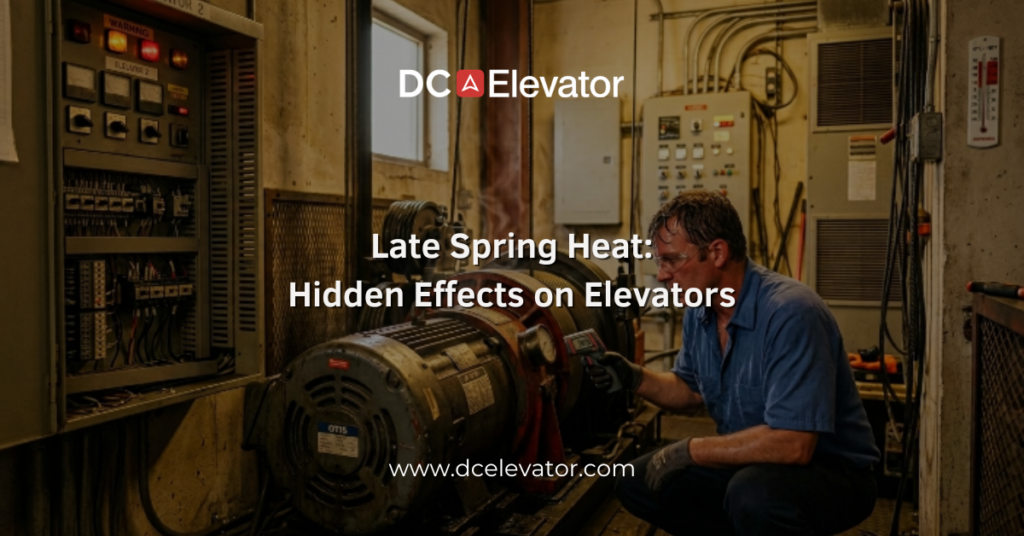
Have you noticed your building systems working harder as temperatures begin to rise? Elevators are no exception. As late spring brings warmer days and increased humidity, subtle changes in temperature can start to impact elevator performance in ways that aren’t always immediately visible. For property managers and facility teams, this seasonal shift can lead to slower response times, unexpected shutdowns, or increased wear on critical components.
Understanding how rising temperatures affect elevator systems is essential for maintaining reliability, safety, and tenant satisfaction. Whether you manage a commercial building, residential property, or healthcare facility, being proactive during this transitional season can help you avoid costly disruptions as summer approaches.
How Heat Affects Elevator Components
Elevators rely on a combination of mechanical and electrical systems that are sensitive to environmental conditions. As temperatures rise, several key components can be affected:
-
Control systems and electronics: Heat can cause sensitive circuits to overheat, leading to intermittent faults or system shutdowns.
-
Lubricants: Higher temperatures can thin lubricants, reducing their effectiveness and increasing friction between moving parts.
-
Motors and drives: Elevated temperatures can strain motors, causing them to work harder and potentially shortening their lifespan.
Even small increases in ambient temperature can gradually reduce system efficiency, especially in machine rooms without proper climate control.
Increased Demand During Warmer Months
Late spring often brings increased building activity—more foot traffic, tenant movement, and maintenance projects. Elevators may run more frequently, which adds additional stress to already heat-affected components.
For example, office buildings may see higher daily usage, while residential properties may experience more move-ins and move-outs. Combined with rising temperatures, this increased demand can accelerate wear and lead to performance inconsistencies such as longer wait times or uneven leveling.
Common Warning Signs to Watch For
Facility managers should stay alert for early indicators that heat is impacting elevator performance:
-
Slower door operation or delayed responses
-
Unusual noises from the motor or hoistway
-
Frequent resets or minor service interruptions
-
Overheating alerts in machine rooms
Addressing these signs early can prevent more serious issues during peak summer heat.
Practical Steps to Improve Performance
Preparing your elevator system for late spring and summer doesn’t always require major upgrades. Small, proactive steps can make a significant difference:
1. Improve Machine Room Ventilation
Ensure proper airflow and cooling to prevent overheating of critical equipment.
2. Schedule Preventive Maintenance
Routine inspections can identify heat-related wear before it becomes a major problem.
3. Check Lubrication Levels
Using the right type and amount of lubricant helps maintain smooth operation under higher temperatures.
4. Inspect Electrical Components
Regular checks of wiring and control panels can reduce the risk of heat-related failures.
Working with a trusted elevator service provider can help ensure these steps are completed thoroughly and consistently.
Why Early Action Matters
Waiting until summer to address heat-related issues can lead to unexpected downtime and costly emergency repairs. Late spring offers a valuable window to assess system performance and make adjustments before conditions become more extreme.
Proactive planning not only extends the life of your equipment but also improves the overall experience for tenants and visitors—something that directly reflects on your building’s quality and management.
Rising temperatures in late spring may seem like a minor seasonal change, but their impact on elevator performance can be significant. From overheating components to increased system demand, these factors can quietly reduce efficiency and reliability if left unaddressed.
By focusing on preventive maintenance, proper ventilation, and early inspections, building owners and facility managers can stay ahead of potential issues and ensure smooth operation throughout the warmer months.
If you’re unsure whether your elevator system is prepared for rising temperatures, our team can help evaluate its condition and recommend practical solutions. Contact us today to schedule a seasonal elevator assessment and keep your system running at its best.