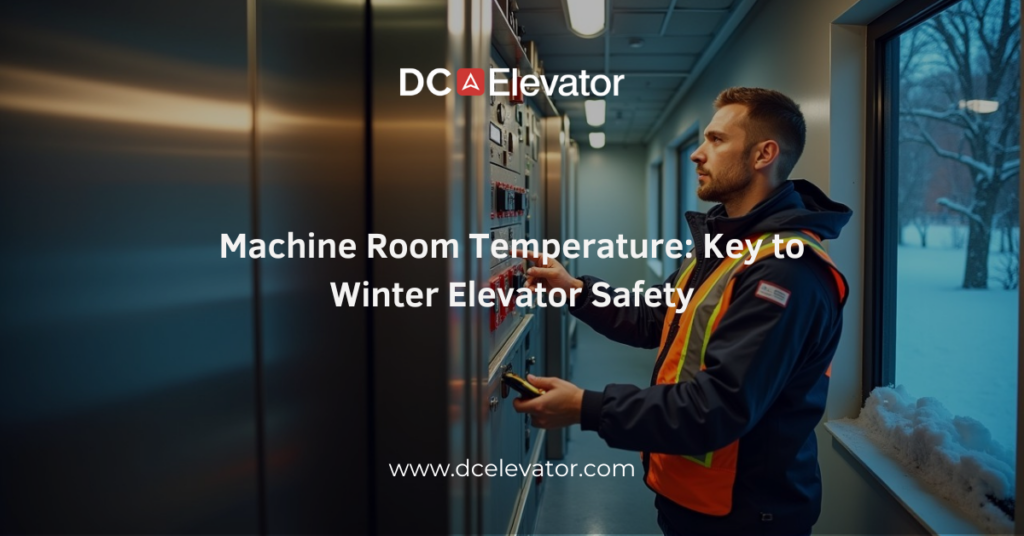
As winter approaches, elevator performance depends heavily on one often-overlooked space: the machine room. While tenants may never see it, this critical area controls how reliably and safely an elevator operates—especially during freezing temperatures. In many buildings, the machine room experiences temperature fluctuations that put strain on motors, drives, controllers, and hydraulic systems. Even a well-maintained elevator can suffer cold-related issues if the machine room isn’t properly heated, insulated, or protected from moisture. This blog explores why machine room temperature is one of the most important factors in winter elevator safety and what building managers can do to maintain a stable, winter-ready environment.
Why Machine Room Temperature Matters
Elevator equipment is designed to function within a specific temperature range. When a machine room becomes too cold, components must work harder, leading to reduced efficiency and increased wear. Electrical controls may slow down, hydraulic oil may thicken, and traction systems may strain to perform their normal functions.
Most manufacturers recommend keeping machine rooms between 50°F and 90°F year-round to avoid seasonal disruptions.
Common Cold-Weather Problems in Machine Rooms
Improper temperature control can lead to several issues:
-
Thickened hydraulic oil, slowing elevator movement
-
Condensation, which can affect sensors, wiring, and control boards
-
Faulty readings, causing doors to malfunction or leveling to become inconsistent
-
Stress on motors, especially during peak traffic hours
-
Water intrusion risks, especially during freeze-thaw cycles
These problems often start in early winter and escalate if ignored.
How to Maintain Proper Machine Room Conditions
Maintaining machine room temperature begins with ensuring proper insulation and functioning heaters. Any cracks, gaps, or drafts should be sealed to prevent cold air infiltration. HVAC systems should be inspected to confirm they can maintain winter temperatures.
Humidity control is equally important. Excess moisture can cause water damage, rust, and electrical problems—all common during winter months. A dehumidifier can help stabilize moisture levels and protect sensitive equipment.
Additionally, routine winter inspections allow technicians to assess equipment stress and make necessary adjustments before problems become urgent.
A properly controlled machine room is essential for winter elevator safety and reliability. By maintaining stable temperatures, reducing moisture, and ensuring the room is winter-ready, building owners can prevent breakdowns, protect equipment, and avoid costly repairs. As temperatures drop, now is the ideal time to evaluate the condition of your elevator machine room.
If you want to ensure your building is fully prepared for winter, contact DC Elevator today for a comprehensive seasonal inspection.