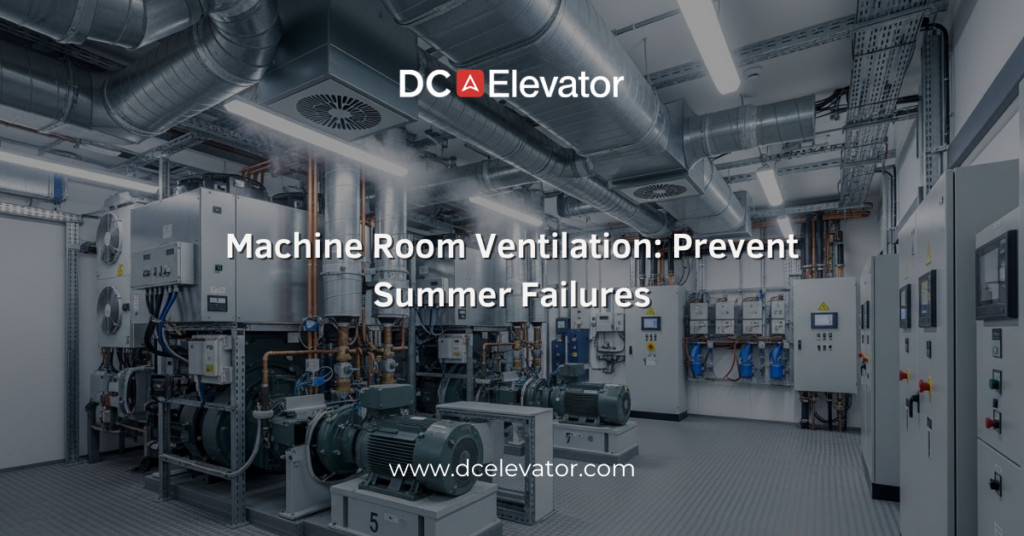
Have you ever noticed your building systems working harder as temperatures rise? Elevators are no exception. While most attention is given to the elevator cab itself, the machine room plays a critical role in overall performance—especially as summer approaches. Rising heat and poor airflow can quietly impact sensitive components, leading to unexpected shutdowns or costly repairs.
For facility managers and property owners, understanding how ventilation affects elevator systems is essential. A poorly ventilated machine room can trap heat, strain equipment, and reduce system lifespan. Preparing early not only helps avoid disruptions but also ensures your building remains safe, efficient, and comfortable for tenants during peak seasonal demand.
Why Machine Room Ventilation Matters
Elevator machine rooms house critical components such as motors, controllers, and electrical systems. These parts generate heat during normal operation, and without proper ventilation, temperatures can quickly climb beyond safe limits.
When heat builds up, it can cause control systems to malfunction, increase wear on moving parts, and even trigger automatic shutdowns designed to prevent damage. In many cases, what appears to be a sudden failure is actually the result of prolonged heat exposure.
Common Ventilation Challenges in Buildings
Many buildings—especially older ones—were not designed with modern heat loads in mind. As elevator usage increases and equipment ages, ventilation systems may struggle to keep up.
Common issues include:
-
Blocked or undersized vents restricting airflow
-
Lack of dedicated cooling systems in machine rooms
-
Dust buildup that reduces air circulation
-
Seasonal temperature spikes that overwhelm existing ventilation
For example, during late spring and early summer, buildings often experience sudden temperature increases. Without proper airflow, machine rooms can trap this heat, causing equipment to operate under stress for extended periods.
Signs Your Machine Room Needs Attention
It’s not always obvious when ventilation is a problem, but there are warning signs facility managers should watch for:
-
Frequent elevator shutdowns during warmer days
-
Unusual noises or slower performance
-
Overheating alarms or fault codes
-
Increased maintenance calls without a clear root cause
These issues often point back to environmental conditions rather than mechanical failure alone.
Practical Solutions to Improve Ventilation
Improving machine room ventilation doesn’t always require a major overhaul. In many cases, targeted adjustments can make a significant difference:
Upgrade Airflow Systems
Installing or enhancing exhaust fans and ventilation openings helps regulate temperature and maintain consistent airflow.
Regular Cleaning and Maintenance
Removing dust and debris from vents and equipment ensures proper air circulation and prevents heat buildup.
Monitor Temperature Levels
Adding temperature sensors allows facility teams to track conditions and respond before problems escalate.
Evaluate System Capacity
If your building has undergone changes—such as increased occupancy or usage—it may be time to reassess whether your current ventilation setup is sufficient.
Working with elevator professionals can help identify these gaps and recommend practical improvements tailored to your building’s needs.
As summer approaches, machine room ventilation becomes a critical factor in maintaining reliable elevator performance. Heat buildup can lead to unexpected downtime, higher repair costs, and tenant dissatisfaction—all of which are avoidable with the right preparation.
By addressing ventilation early, building owners and facility managers can protect their equipment, extend system lifespan, and ensure smooth daily operations.
If you’re unsure whether your elevator machine room is ready for rising temperatures, our team can help assess your system and recommend practical solutions to keep everything running efficiently. Reach out today to schedule a professional evaluation.