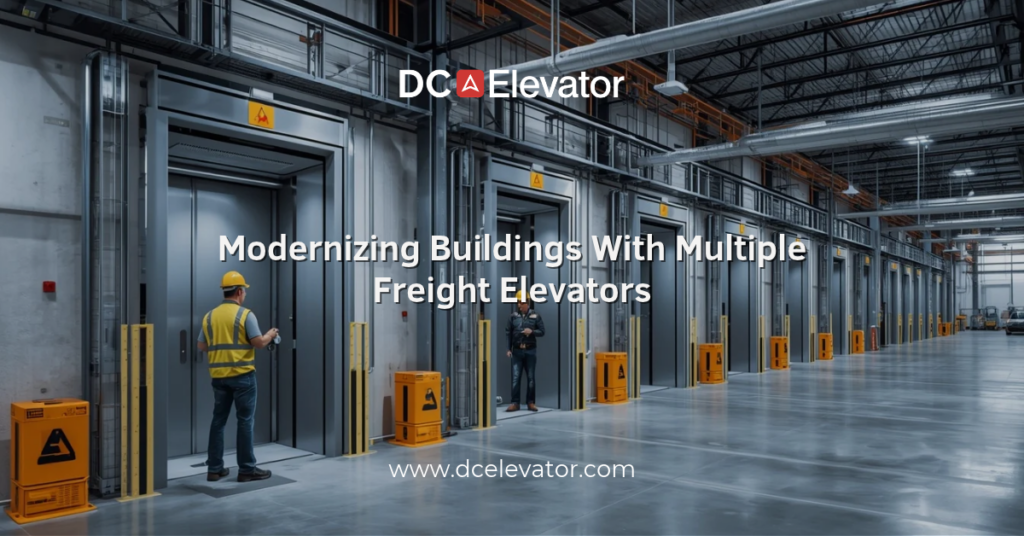
What happens when a warehouse, manufacturing facility, or commercial building relies on several freight elevators, but multiple units begin showing signs of age? When one elevator needs repairs, daily operations may be affected. When several require attention, the impact can be even greater. For property owners and facility managers, maintaining reliable freight elevator service is essential to keeping materials, equipment, and deliveries moving throughout the building.
Modernization becomes more complex when a property has multiple freight elevators. Each unit may have a different age, operating history, capacity, or maintenance condition. Rather than approaching every elevator the same way, building owners should develop a coordinated strategy that considers operational demands, equipment condition, budget, and downtime. A thoughtful plan can help improve reliability while avoiding unnecessary disruption to daily business activities.
Evaluate Each Elevator Individually
A building with multiple freight elevators may appear to have identical equipment, but the units may differ in age, condition, usage, and performance. One elevator may experience heavy daily traffic, while another handles occasional deliveries or serves a specific section of the facility.
Before planning modernization, building owners should arrange an evaluation of each unit. Important considerations include:
- Equipment condition: Review controllers, drive equipment, door systems, and other major components for age, wear, and recurring problems.
- Maintenance history: Identify elevators with frequent breakdowns, repeated repairs, or extended service interruptions.
- Parts availability: Determine whether replacement components are becoming difficult to source.
- Operational demands: Consider each elevator’s rated capacity, travel requirements, traffic volume, and role in daily operations.
This assessment helps establish which units need immediate attention and which may remain suitable for continued service with routine maintenance.
Prioritize Modernization Based on Operational Needs
Modernizing every freight elevator at once may not be practical or necessary. A phased approach can allow building owners to address the most critical equipment first while spreading project costs over time.
For example, a distribution facility may prioritize the freight elevator serving its busiest loading area because an extended shutdown could delay deliveries and interrupt workflow. Another elevator with fewer operating hours may be suitable for a later modernization phase, provided its condition and safety requirements allow continued operation.
Prioritization should be based on professional assessments, equipment condition, operational importance, and applicable safety requirements—not age alone.
Plan Around Downtime and Building Operations
When a building depends on multiple freight elevators, taking several units out of service simultaneously can create significant operational challenges. Modernization schedules should account for delivery patterns, production requirements, staffing, and alternative material-handling arrangements.
Whenever possible, projects can be scheduled in phases so other suitable elevators remain available. However, building owners should confirm that the remaining equipment can safely and reasonably handle the temporary increase in demand.
Coordination between elevator contractors, facility managers, building staff, and other project teams is essential. Clear communication about service interruptions, work schedules, and temporary operating arrangements helps reduce confusion.
Consider Long-Term Maintenance and Consistency
Modernization planning should also consider how the building will maintain its elevators after upgrades are complete. Where practical, coordinating equipment specifications and maintenance procedures across units may simplify service planning and staff training.
A qualified elevator provider can help identify appropriate modernization options, establish priorities, and develop a long-term maintenance strategy suited to the building’s operations.
Modernizing a building with multiple freight elevators requires more than upgrading individual units. Building owners must consider each elevator’s condition, operational importance, maintenance history, and the impact of downtime on daily activities. A coordinated, phased strategy can help prioritize necessary improvements, manage project costs, and maintain access to essential freight transportation wherever possible.
The best modernization plan begins with a professional evaluation of the entire elevator system. This gives facility managers a clearer understanding of which units need attention now and how future upgrades can be scheduled effectively.
If your facility relies on multiple freight elevators, DC Elevator can help evaluate their condition and develop a modernization strategy that considers your building’s operational needs. Contact our team today to discuss an elevator analysis and plan upgrades that support long-term reliability and efficient building operations.