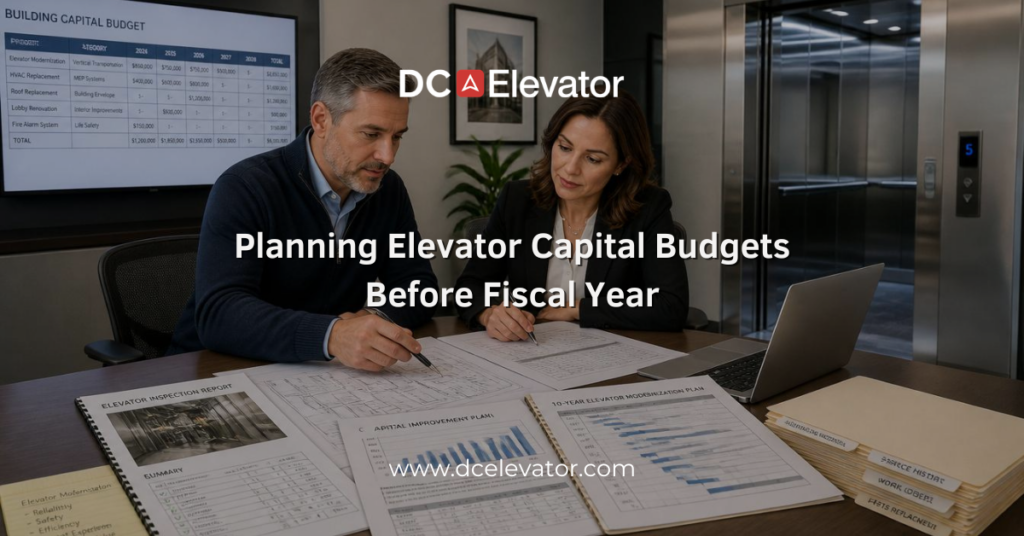
Is your organization preparing next year’s capital budget? If so, your elevator system deserves careful consideration. Elevators are among the most heavily used assets in commercial buildings, yet major upgrades and modernization projects are often delayed until unexpected failures occur. Waiting for equipment to break down can lead to emergency expenses, unplanned downtime, and disruptions for tenants and visitors.
For property owners, facility managers, and financial decision-makers, planning elevator capital improvements before the next fiscal year provides an opportunity to make informed investments rather than reactive repairs. By evaluating equipment condition, anticipated maintenance costs, and long-term building needs, organizations can create a realistic budget that supports safety, reliability, and operational efficiency while minimizing financial surprises.
Start with a Comprehensive Equipment Assessment
An effective capital budget begins with understanding the current condition of your elevator system. Review maintenance records, service history, equipment age, and recurring repairs to identify patterns that may indicate aging components.
Questions to consider include:
- Has maintenance frequency increased over the past few years?
- Are replacement parts becoming more difficult to obtain?
- Have tenants reported recurring operational issues?
- Does the equipment still meet current building requirements?
A professional elevator assessment provides valuable information that helps prioritize future investments and supports budget planning with accurate recommendations.
Differentiate Maintenance from Capital Improvements
Routine maintenance helps keep elevators operating safely and reliably, but it does not eliminate the need for eventual capital improvements. Components naturally wear over time, and certain equipment reaches the point where replacement becomes more cost-effective than continued repairs.
Capital budgeting should account for projects such as:
- Elevator modernization
- Control system upgrades
- Door equipment replacement
- Interior cab renovations
- Safety-related component updates
Separating routine operating expenses from long-term capital investments creates a clearer financial roadmap for building owners.
Prioritize Projects Based on Risk and Building Needs
Not every elevator requires immediate modernization. Facilities with multiple elevators may benefit from a phased approach that spreads costs across several budget cycles while maintaining reliable service.
When determining priorities, consider factors such as:
- Equipment age
- Frequency of service interruptions
- Building occupancy
- Tenant expectations
- Future renovation or expansion plans
Planning ahead allows organizations to schedule projects strategically instead of responding to emergency failures that may require immediate funding.
Budgeting Today Can Reduce Future Costs
Delaying necessary capital improvements often results in increasing repair costs and greater operational disruption. Older equipment may require more frequent service visits, while unexpected outages can inconvenience tenants, employees, and visitors.
By incorporating elevator improvements into annual capital planning, property managers gain greater control over scheduling, budgeting, and contractor coordination. This proactive approach also allows building leadership to evaluate multiple options and develop long-term asset management strategies that align with organizational goals.
Working with experienced elevator professionals during the budgeting process helps ensure recommendations are based on actual equipment condition rather than assumptions, making capital planning more accurate and cost-effective.
Planning elevator capital budgets before the next fiscal year helps building owners avoid unexpected expenses, prioritize necessary improvements, and maintain reliable service for occupants. A proactive budgeting strategy supports better financial planning while extending the life and performance of critical building systems.
If you’re preparing next year’s capital budget, our experienced team can perform a comprehensive elevator assessment and help identify maintenance, modernization, or equipment improvements that align with your building’s long-term goals. Contact us today to schedule an elevator evaluation and make informed decisions before your next budgeting cycle.