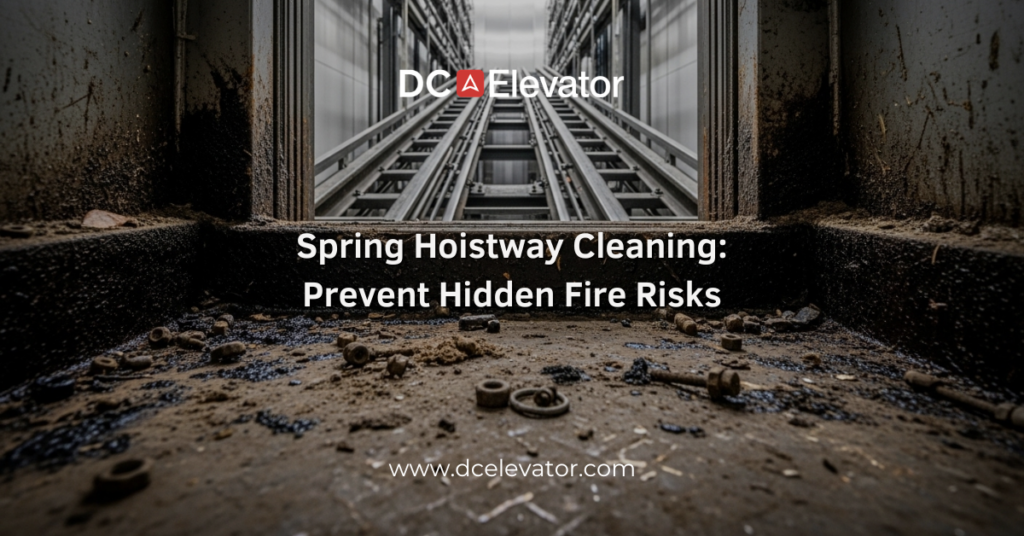
When was the last time your elevator hoistway or pit was thoroughly cleaned? For many buildings, this area is out of sight—and unfortunately, often out of mind. However, as spring arrives and dust, moisture, and debris accumulate, the elevator pit can quickly become a hidden safety concern.
For facility managers, property owners, and building operators, maintaining a clean hoistway is more than just good housekeeping—it’s a critical safety measure. Dust buildup, trash, and oil-soaked debris can create fire hazards that compromise both equipment and occupant safety. Understanding why this happens—and how to prevent it—can help you avoid costly damage, unexpected downtime, and potential compliance issues.
Why Dust and Debris Build Up in Hoistways
Seasonal Factors and Air Movement
During spring, buildings experience increased airflow from open doors, ventilation systems, and changing weather conditions. This movement carries dust, pollen, and debris into elevator shafts, where it settles in the pit.
Everyday Contaminants
Over time, small items like paper, packaging materials, and general debris can fall into the hoistway. Combined with dust and dirt, these materials accumulate and create a layer of combustible material at the bottom of the shaft.
Oil and Lubricant Residue
Elevator systems rely on lubricants to function properly. Minor leaks or drips can mix with dust and debris, creating flammable conditions—especially if not addressed during routine maintenance.
Why This Becomes a Fire Hazard
Combustible Material Accumulation
Dust and debris alone may seem harmless, but when they build up in large quantities, they can become highly combustible. Add oil residue into the mix, and the risk increases significantly.
Electrical Components in Close Proximity
Elevator pits and hoistways contain electrical wiring, switches, and components. If debris comes into contact with these elements, it can increase the risk of overheating or sparks—potential ignition sources.
Limited Visibility and Access
Because hoistways are not frequently inspected beyond routine service visits, hazards can go unnoticed for long periods. By the time an issue is discovered, the buildup may already pose a serious risk.
Real-World Challenges for Building Managers
Many facility teams focus on visible areas like lobbies and cab interiors, while critical spaces like the elevator pit receive less attention. This can lead to a false sense of security.
In older buildings or high-traffic environments, debris can accumulate faster than expected. Without a structured cleaning and inspection schedule, property managers may face unexpected shutdowns, failed inspections, or increased liability risks.
Practical Steps to Reduce Fire Risk
Schedule Regular Hoistway Cleaning
Routine cleaning of the elevator pit and shaft is essential. This includes removing dust, debris, and any foreign materials that may have accumulated over time.
Inspect for Oil Leaks
Addressing leaks early prevents oil from combining with debris and creating hazardous conditions. Even small drips should be evaluated and resolved promptly.
Maintain Proper Housekeeping Practices
Encourage building staff to minimize debris near elevator entrances and service areas. Preventing materials from entering the shaft is just as important as removing them.
Partner with Elevator Professionals
A professional elevator service provider can identify hidden risks during inspections and ensure that cleaning and maintenance are performed safely and effectively.
Spring is the perfect time to address areas that are often overlooked—like your elevator hoistway. Dust, debris, and oil buildup may not be visible to tenants, but they can pose serious fire risks if left unchecked.
By prioritizing regular cleaning, inspections, and preventive maintenance, building owners and facility managers can protect both their equipment and occupants. A proactive approach not only improves safety but also helps avoid costly repairs and unexpected downtime.
If it’s been a while since your elevator pit was inspected or cleaned, now is the time to act. Our team can help assess your hoistway conditions and recommend safe, effective solutions to keep your system running reliably. Contact us today to schedule a professional elevator inspection.