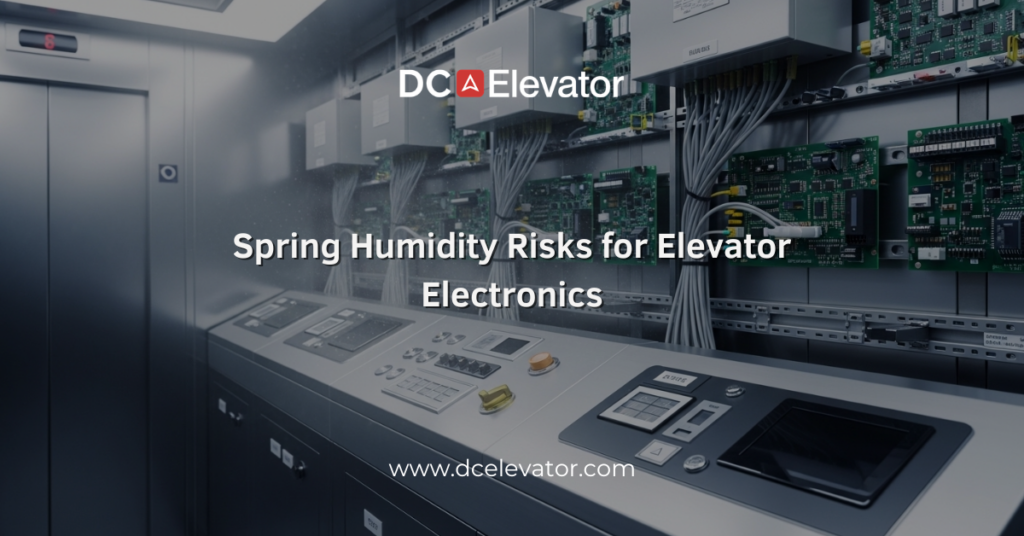
Have you ever noticed elevator issues becoming more frequent as the weather shifts into spring? While temperature changes often get the most attention, rising humidity levels can quietly create serious problems—especially for elevator electronics. For facility managers and building owners, this is an often-overlooked risk that can lead to unexpected downtime, costly repairs, and safety concerns.
Spring moisture doesn’t just affect comfort levels in your building—it can impact sensitive elevator components, particularly controller circuit boards that rely on stable, dry environments to function properly. Understanding how humidity interacts with these systems is essential for maintaining performance and avoiding disruptions. By addressing these risks early, you can protect both your equipment and the people who rely on it every day.
How Humidity Affects Elevator Electronics
Elevator control systems are the “brain” of the entire operation. These systems rely on circuit boards, wiring, and electrical connections that are highly sensitive to environmental conditions. When humidity levels rise, moisture can begin to accumulate inside control panels and electrical enclosures.
This moisture can lead to condensation forming on circuit boards, which increases the risk of short circuits, corrosion, and signal interference. Even small amounts of moisture can cause erratic behavior, such as delayed responses, random faults, or intermittent shutdowns.
Over time, prolonged exposure to humidity can degrade components, reducing the lifespan of your elevator system and increasing the likelihood of failure.
Common Signs of Moisture-Related Issues
Many humidity-related problems don’t appear all at once—they develop gradually. Recognizing early warning signs can help prevent more serious issues later.
Some common indicators include:
-
Intermittent elevator faults or error codes
-
Unresponsive or delayed button commands
-
Flickering or inconsistent display panels
-
Unexpected shutdowns or resets
-
Corrosion visible on electrical components
For example, a property manager might notice that an elevator works fine in the morning but begins acting unpredictably later in the day when humidity levels peak. These inconsistencies are often linked to environmental conditions rather than mechanical failure.
Why Spring Is a Critical Time
Spring introduces a unique combination of warmer temperatures and increased moisture in the air. Buildings that were stable during colder months may suddenly experience condensation issues as the environment changes.
Additionally, elevator machine rooms and control spaces are not always climate-controlled. Without proper ventilation or humidity control, these areas can trap moisture, creating the perfect conditions for electronic issues to develop.
Buildings in regions with frequent rain or fluctuating temperatures are especially vulnerable during this season.
Practical Steps to Protect Your Elevator System
The good news is that humidity-related issues can often be prevented with the right approach. Proactive maintenance and environmental control are key.
Here are a few practical steps to consider:
-
Regular Inspections: Schedule seasonal inspections to check for signs of moisture, corrosion, or condensation in control panels.
-
Climate Control: Ensure machine rooms and control spaces are properly ventilated and, if necessary, equipped with dehumidifiers.
-
Sealed Enclosures: Verify that electrical cabinets are properly sealed to minimize exposure to outside air.
-
Routine Cleaning: Remove dust and debris that can trap moisture and worsen humidity-related damage.
-
Component Upgrades: In some cases, upgrading older control systems can improve resistance to environmental factors and enhance reliability.
Working with a qualified elevator service provider can help identify vulnerabilities before they turn into costly problems.
Spring humidity may seem like a minor seasonal change, but its impact on elevator electronics can be significant. From intermittent faults to long-term component damage, moisture-related issues can disrupt operations and increase maintenance costs if left unaddressed.
By understanding the risks and taking proactive steps—such as inspections, improved ventilation, and system upgrades—you can keep your elevators running smoothly and reliably throughout the season.
If you’ve noticed unusual elevator behavior or want to ensure your system is prepared for changing conditions, our team can help. We offer thorough evaluations and tailored solutions to protect your equipment and maintain peak performance. Reach out today to schedule an elevator system check and stay ahead of seasonal challenges.