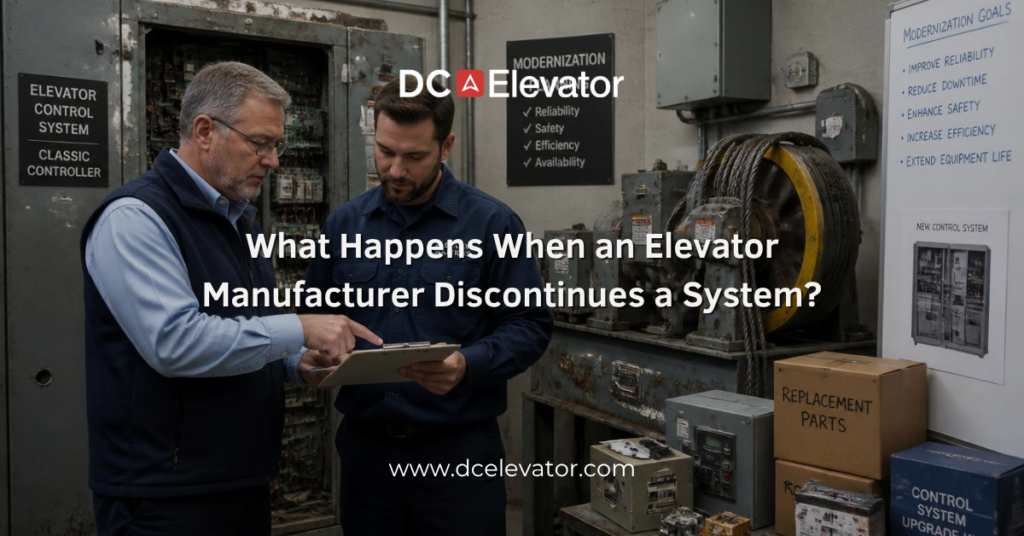
What happens when the elevator system your building depends on is no longer supported by its manufacturer? For property owners and facility managers, a discontinued elevator system can create challenges that go beyond finding a replacement part. As manufacturers introduce newer technologies and phase out older equipment, components may become harder to source, repairs may take longer, and maintaining reliable service can become increasingly difficult.
This situation is especially important for owners of aging commercial, residential, healthcare, and institutional buildings. A system may still be operating adequately today, but limited manufacturer support can create risks for future maintenance and repairs. Understanding what manufacturer discontinuation means—and recognizing the warning signs early—can help building decision-makers plan ahead rather than face an unexpected elevator shutdown.
What Manufacturer Discontinuation Means
When a manufacturer discontinues an elevator system, it generally means the company is no longer producing or actively supporting certain components associated with that equipment. This can include controllers, circuit boards, drives, door operators, relays, displays, and other specialized parts.
Discontinuation does not necessarily mean the elevator must be replaced immediately. Qualified elevator professionals may still be able to maintain the equipment using available parts, refurbished components, or compatible alternatives. However, the longer a system remains obsolete, the more difficult and expensive certain repairs can become.
For example, a facility may experience a control-board failure. If the manufacturer no longer produces that board, the repair could require additional sourcing, refurbishment, or an alternative solution instead of a straightforward replacement.
Signs Your Elevator May Be Becoming Obsolete
Facility managers should pay attention to several warning signs. Increasing repair times, difficulty locating parts, repeated equipment failures, and rising maintenance expenses can all indicate that an elevator system is approaching obsolescence.
Another important consideration is the age and availability of the system’s technology. If technicians frequently have to search for discontinued components or rely on limited inventories, future repairs may become more challenging.
A pattern of recurring failures can also provide valuable information. Even when individual repairs restore service, repeated problems with the same equipment may indicate that continued repairs are becoming less practical than a planned modernization.
Planning Ahead Can Reduce Disruptions
The best time to evaluate an obsolete elevator system is before a critical component fails. Facility managers can work with an elevator service professional to assess the current condition of the equipment, identify parts that may be difficult to obtain, and determine whether modernization should become part of the building’s capital plan.
An elevator analysis can help compare continued maintenance with modernization options. Depending on the equipment’s condition, a modernization project may address outdated controls, improve reliability, update operating components, and provide better long-term access to serviceable parts.
Planning also gives property owners more control over timing and budgeting. Instead of responding to an unexpected failure, they can schedule improvements around tenant needs, building operations, and available capital.
Why Professional Evaluation Matters
Every elevator system has different equipment, operating conditions, maintenance history, and service requirements. Manufacturer discontinuation alone does not automatically mean replacement is necessary.
A professional evaluation can help determine whether continued maintenance is reasonable or whether modernization would provide a better long-term solution. It can also identify immediate concerns that should be addressed before they develop into more significant service interruptions.
A discontinued elevator system can make maintenance more complicated, particularly when replacement parts become difficult to source or specialized equipment is no longer supported. While an aging system may continue operating for years, waiting until a critical component fails can leave building owners with fewer options and greater operational disruption.
Planning ahead allows facility managers to understand their elevator’s condition, anticipate potential parts challenges, and make informed decisions about future maintenance or modernization. If your elevator relies on aging or discontinued equipment, our experts can evaluate the system and help determine whether continued service or modernization is the more practical path forward. Contact us today for an elevator analysis and start planning before parts availability becomes an emergency.