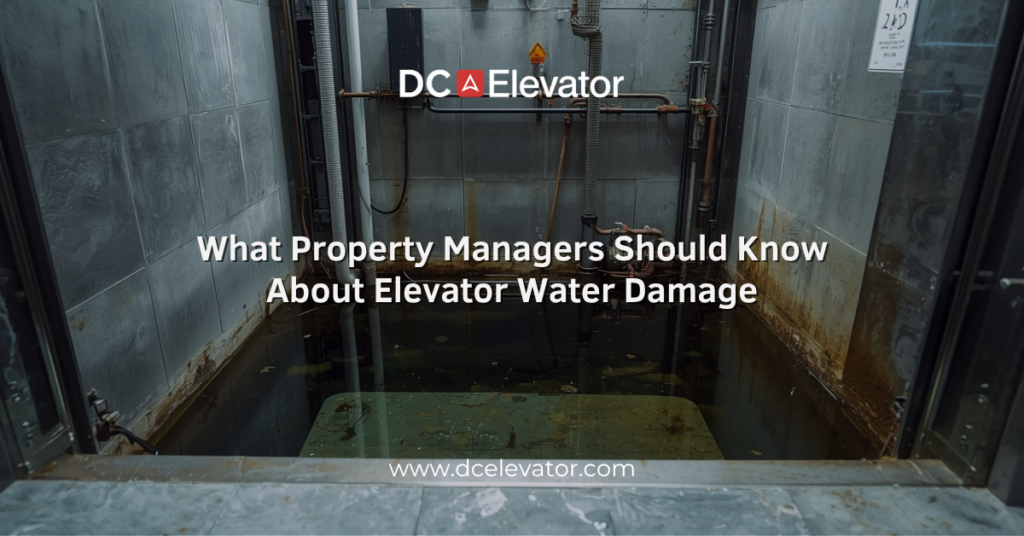
What happens when water finds its way into an elevator pit, machinery area, or other elevator equipment? A leaking pipe, heavy rain, groundwater intrusion, or drainage problem can create more than a temporary inconvenience. Water exposure can affect elevator components, contribute to corrosion, and create conditions that require immediate attention.
For property managers and facility teams, recognizing the warning signs of elevator water damage is an important part of protecting building operations. Elevator systems contain electrical, mechanical, and structural components that are not designed to operate in wet conditions. Even when the source of the water appears minor, delaying an inspection can allow the problem to become more complicated. Understanding where water damage can occur and what steps to take can help property managers respond quickly and reduce the risk of extended elevator downtime.
Where Elevator Water Damage Can Occur
Elevator pits are particularly vulnerable because they are located below the lowest occupied level of a building. Water can enter through groundwater, poor drainage, foundation leaks, plumbing failures, or storm-related flooding.
Water can also reach elevator equipment through leaks near machine rooms, overhead areas, or building systems located close to the elevator shaft. In some buildings, condensation or roof and plumbing leaks can create moisture problems that are not immediately obvious.
The source of the water matters. A small recurring leak can be just as important to investigate as a single major water event because repeated exposure can gradually affect equipment and surrounding surfaces.
How Water Can Affect Elevator Equipment
Water exposure can contribute to corrosion on metal components and may affect electrical equipment, wiring, switches, and other elevator components. Moisture can also create conditions that accelerate deterioration when it remains in contact with equipment over time.
In an elevator pit, standing water can create additional concerns for components located near the bottom of the shaft. Rust, corrosion, and damaged equipment may eventually contribute to operational problems or increased maintenance requirements.
Property managers should never assume that removing visible water means the problem has been completely resolved. The underlying source needs to be identified, and affected elevator equipment should be evaluated by qualified professionals before normal operation resumes.
Warning Signs Property Managers Should Watch For
Some signs of water-related problems may be easy to overlook. These can include standing water in the pit, visible rust or corrosion, damp surfaces, water stains, unusual equipment conditions, or recurring moisture after storms.
Unexpected elevator shutdowns following heavy rain or plumbing incidents may also warrant an inspection. If moisture has reached elevator equipment, attempting to operate or clean around affected components without professional guidance can create additional risks.
Regular inspections and maintenance can help identify water intrusion before it results in more extensive equipment damage.
What to Do After Water Enters an Elevator Area
The first priority should be addressing the source of the water and keeping occupants away from potentially affected equipment. Property managers should contact qualified elevator professionals to evaluate the condition of the system and determine whether components have been exposed to moisture.
An inspection can help identify visible damage, corrosion, or other conditions that may require repair. Depending on the extent of the exposure, affected components may need additional evaluation before the elevator can safely return to normal service.
For buildings with recurring water intrusion, property managers should also coordinate with building maintenance teams to address drainage, plumbing, waterproofing, or other sources contributing to the problem. Preventing repeated exposure is an important part of protecting the elevator system over the long term.
Elevator water damage is an issue property managers should take seriously. Water can enter elevator areas through storms, groundwater, plumbing leaks, drainage problems, and other building conditions. If moisture reaches elevator equipment, it can contribute to corrosion, deterioration, and operational concerns.
The best response is to address the source of the water and have the elevator professionally inspected before assuming the system is unaffected. Regular maintenance can also help identify early signs of corrosion, moisture exposure, and equipment wear.
If your elevator has been exposed to water or you have noticed standing water, corrosion, or recurring moisture, our experts can evaluate the condition of your system and recommend the appropriate maintenance or repair. Contact us today for an elevator analysis and help protect your elevator from further water-related damage.