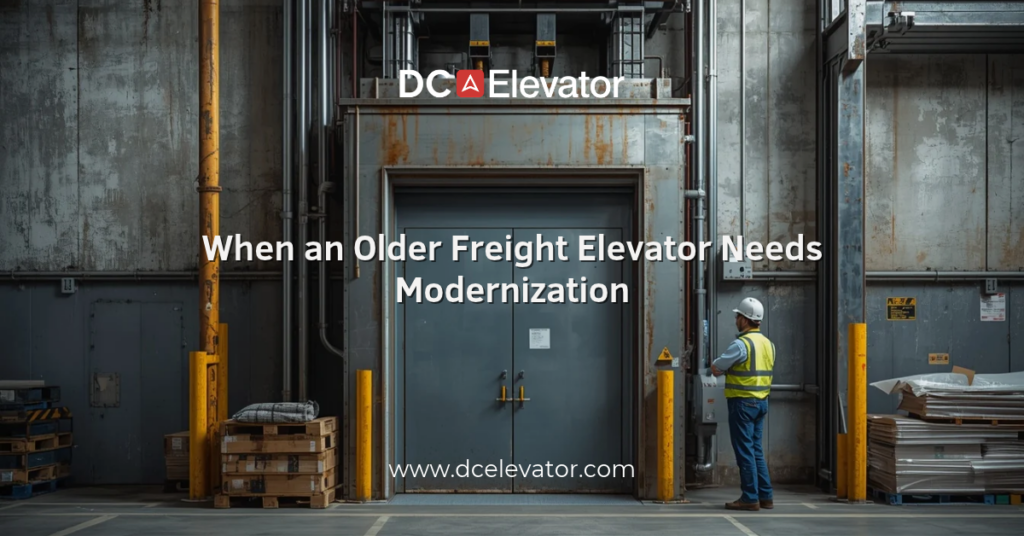
Does your building’s freight elevator struggle to keep up with daily deliveries, heavy materials, or demanding warehouse operations? An older freight elevator may continue to function for years, but frequent breakdowns, inconsistent performance, and difficulty sourcing replacement parts can make it increasingly challenging to maintain reliable service.
For building owners, property managers, and facility teams, these issues can affect more than convenience. Freight elevators are essential to operations in warehouses, manufacturing facilities, hospitals, hotels, and commercial buildings where moving equipment, supplies, and materials is part of everyday business. When an elevator becomes unreliable, deliveries may be delayed, employees may lose valuable time, and maintenance expenses can rise.
Developing a modernization strategy before major problems occur allows building owners to evaluate the elevator’s condition, prioritize necessary improvements, and plan investments around operational needs rather than waiting for an unexpected failure.
Signs Your Freight Elevator May Need Modernization
Not every older freight elevator requires a complete upgrade. However, certain warning signs indicate that a professional evaluation may be worthwhile.
Frequent breakdowns and repairs: If service calls are becoming more common, recurring component failures may indicate that the elevator is reaching a point where continued repairs are less practical.
Difficulty sourcing replacement parts: Older systems may rely on components that are no longer readily available. Longer repair timelines can increase downtime and make it harder to maintain dependable service.
Inconsistent operation: Unusual noises, rough starts and stops, inaccurate leveling, or unreliable door operation should be investigated. These symptoms can have several causes, and a qualified technician can determine whether repairs or modernization are appropriate.
Changing operational demands: A freight elevator that once served a building adequately may no longer meet its current loading requirements, usage patterns, or workflow needs.
What Should a Modernization Strategy Include?
A successful modernization strategy begins with a thorough assessment of the existing elevator. Building owners should consider the equipment’s age and condition, maintenance history, parts availability, operating performance, and any applicable safety or code concerns.
The evaluation can help identify which components need attention and whether a partial or more comprehensive modernization is the better option. Depending on the elevator’s condition, improvements may involve the controller, drive equipment, door systems, operating fixtures, or other major components.
It is also important to evaluate how the elevator supports daily operations. For example, a distribution facility with frequent material movement may prioritize reliability and minimizing service interruptions, while a commercial building may need to coordinate upgrades around tenant schedules and delivery hours.
Planning Modernization Around Your Operations
Freight elevator modernization requires coordination, particularly when the elevator supports essential business activities. Building owners should discuss project scope, expected downtime, scheduling, budget, and temporary material-handling arrangements with their elevator service provider.
Planning ahead allows decision-makers to compare repair and modernization options, establish realistic timelines, and prepare occupants or staff for service interruptions.
An older freight elevator does not automatically need replacement, but recurring breakdowns, unreliable operation, obsolete components, and changing building requirements can signal that a modernization strategy is needed. Evaluating these concerns early helps building owners make informed decisions, manage maintenance expenses, and reduce the risk of unplanned downtime.
The best approach is to assess the elevator as a complete system and determine which improvements will provide the greatest long-term value. A carefully planned modernization can help an aging freight elevator better support the building’s operational demands while addressing reliability and safety concerns.
If your freight elevator is experiencing recurring problems or struggling to meet your building’s needs, DC Elevator can assess its condition and help you determine whether targeted repairs or modernization would be the most practical solution. Contact our team today to discuss a freight elevator analysis and plan the next steps with confidence.