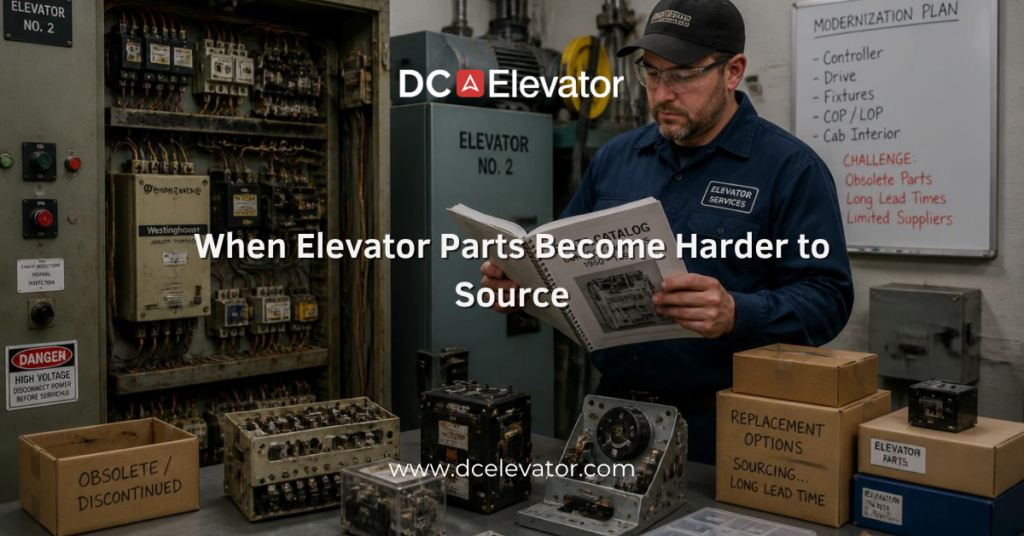
What happens when a critical elevator component needs to be replaced, but the manufacturer no longer produces it? For property owners and facility managers, this situation can turn a routine repair into a much more complicated maintenance challenge. As elevator systems age, manufacturers may discontinue older components, suppliers may stop stocking certain parts, and specialized equipment can become increasingly difficult to locate.
Parts availability is an important consideration when managing an aging elevator system. A building may still have an elevator that operates reasonably well, but difficulty sourcing essential components can make future repairs slower, more expensive, or less predictable. Understanding the warning signs of elevator obsolescence allows facility teams to plan ahead rather than waiting for a critical failure to expose a parts shortage.
Why Replacement Parts Become Difficult to Find
Elevator technology changes over time. Manufacturers introduce newer controls, motors, door equipment, electrical components, and other systems while eventually discontinuing older product lines.
When a component reaches the end of its production life, replacement inventory can become limited. Suppliers may have only a small number of parts remaining, and some components may need to be sourced from specialized vendors or through alternative channels.
This can create challenges when an older elevator experiences an unexpected failure. A repair that once took a relatively short time may require additional research and sourcing before the appropriate component can be obtained.
Signs Your Elevator May Be Becoming Obsolete
Difficulty finding parts is one of the clearest warning signs, but it is not the only one. Facility managers should also pay attention to:
- Repeated repairs involving the same outdated components
- Increasing difficulty identifying compatible replacement parts
- Longer wait times for specialized components
- Manufacturers discontinuing equipment used in the system
- Rising repair costs due to limited parts availability
- Increasing elevator downtime while waiting for repairs
A single hard-to-find part does not necessarily mean an elevator needs to be replaced. However, several of these issues occurring together may indicate that the system deserves a more comprehensive evaluation.
Planning Ahead Can Reduce Disruption
Waiting until a critical component fails can leave property managers with limited options. A better approach is to understand the condition and serviceability of the elevator before an emergency occurs.
An experienced elevator technician can review the system, identify aging or obsolete components, and help determine which parts may present future availability concerns. This information can support more informed budgeting and maintenance decisions.
In some cases, continued repair and maintenance may be appropriate. In others, modernization may provide a more practical long-term solution by replacing obsolete components with currently supported equipment.
Consider the Cost of Maintaining Aging Equipment
The cost of an older elevator is not limited to individual repair bills. Facility managers should also consider downtime, emergency service, extended parts lead times, and the operational impact on tenants or building occupants.
For example, an elevator that serves a busy office building, medical facility, hotel, or apartment property can create significant inconvenience when it remains out of service while a specialized component is being sourced.
Evaluating parts availability as part of a long-term capital planning strategy can help property owners make decisions before an unexpected failure forces them to act quickly.
Know Your Options Before a Major Failure
Modernization does not always mean replacing the entire elevator. Depending on the system’s condition, targeted upgrades may address obsolete controls, door equipment, or other components while extending the useful life of the existing system.
The right approach depends on the elevator’s age, condition, operating demands, parts availability, and the building’s long-term plans. A professional evaluation can help determine whether continued maintenance, component upgrades, or broader modernization makes the most sense.
Elevator obsolescence can become a significant maintenance concern when replacement parts are difficult to source. Limited availability can increase repair times, costs, and downtime, particularly when a critical component fails unexpectedly. By monitoring parts availability and evaluating aging equipment before a major failure occurs, property managers can make better-informed maintenance and capital planning decisions.
If your elevator relies on older equipment or replacement parts are becoming increasingly difficult to find, our experienced team can evaluate the system and help identify potential serviceability concerns. Contact us today for an elevator analysis and learn whether continued repairs, targeted upgrades, or modernization may be the right approach for your building.