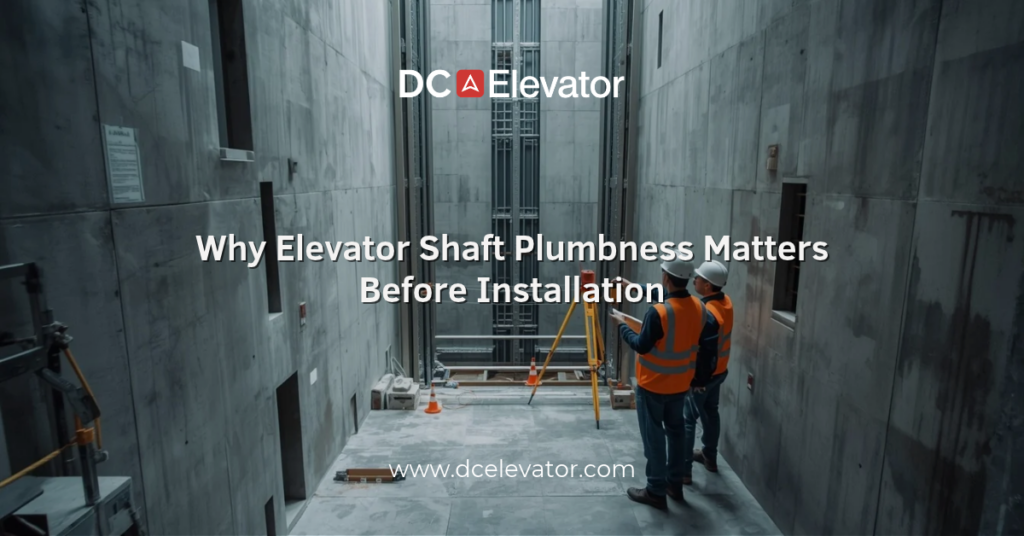
Before an elevator is installed in a new building, there is an important construction detail that can have a lasting effect on its performance: the elevator shaft must be properly aligned. Even small deviations from the required dimensions or vertical alignment can create challenges during installation and affect how elevator components fit and operate.
Elevator shaft plumbness refers to how accurately the hoistway walls and structure follow a true vertical line from the bottom of the shaft to the top. For property developers, general contractors, architects, and building owners, understanding this requirement early can help prevent construction delays, unexpected adjustments, and additional costs. Proper coordination between construction teams and elevator professionals ensures that the shaft is prepared to accommodate the specified elevator system before installation begins.
What Does Elevator Shaft Plumbness Mean?
An elevator shaft, also called a hoistway, is the vertical space where the elevator car and counterweight travel. Its dimensions and alignment must meet the requirements of the selected elevator system.
Plumbness describes how closely the shaft maintains its intended vertical alignment throughout its height. If the walls lean, shift, or vary significantly in position, the available clearance for elevator equipment may be affected.
This is important because elevator installations depend on precise relationships between several components, including guide rails, brackets, the elevator car, counterweight, and door entrances. The allowable dimensions and tolerances vary according to the elevator design, manufacturer specifications, and applicable building codes.
Why Proper Shaft Alignment Matters
1. Supports Accurate Guide Rail Installation
Guide rails help control the movement of the elevator car and counterweight. If the shaft is outside the required dimensions or alignment tolerances, installing and positioning the rails may become more difficult. Proper shaft preparation helps installation teams establish the required alignment and clearances.
2. Helps Maintain Required Clearances
Elevator systems need appropriate clearances between moving equipment and surrounding structures. An improperly aligned shaft may reduce available space in certain areas, potentially creating installation complications or requiring corrective construction work.
3. Reduces Installation Delays and Extra Costs
Discovering shaft alignment problems after elevator equipment arrives can disrupt construction schedules. Corrective work may involve additional measurements, coordination with contractors, and structural adjustments. Identifying concerns before installation helps teams address them earlier, when changes may be easier to manage.
4. Supports Long-Term Elevator Performance
Proper shaft preparation provides the conditions needed for elevator components to be installed according to their design requirements. While shaft plumbness alone does not determine elevator performance, it is an important part of achieving a properly installed system.
How Construction Teams Can Prepare
Shaft alignment should be reviewed before elevator installation begins, not simply assumed to be correct once concrete and structural work are complete.
General contractors should coordinate dimensional surveys and verification with qualified professionals. Measurements should consider the full height of the shaft, including wall positions, openings, and other relevant structural conditions.
Elevator contractors should also review the approved elevator drawings and specifications with the construction team. If measurements reveal deviations, the responsible professionals can determine whether corrective work is needed before installation proceeds.
Clear communication between architects, structural engineers, contractors, and elevator specialists helps prevent avoidable conflicts during the project.
Elevator shaft plumbness is an important consideration in new construction because it affects the space and clearances available for elevator equipment. Proper alignment helps support accurate guide rail installation, reduces the risk of construction conflicts, and allows the elevator system to be installed according to its design requirements.
For developers and general contractors, involving elevator professionals during the planning and construction stages can help identify potential issues before they become costly delays. A careful review of shaft dimensions and specifications is a practical step toward a smoother installation process.
Planning an elevator installation for a new building? DC Elevator can help review your project requirements and coordinate with your construction team to address elevator shaft and installation considerations. Contact us today to discuss your new construction elevator needs and help prepare your project for a successful installation.