Have you ever noticed elevators slowing down or shutting off unexpectedly as temperatures rise? Warmer months can put added stress on building systems, and elevators are no exception. For property owners and facility managers, this seasonal shift often brings an increase in service calls, performance issues, and even unexpected downtime.
Elevator systems rely on a balance of mechanical and electrical components that are sensitive to heat. When temperatures climb, especially in poorly ventilated spaces, these components can struggle to operate efficiently. Understanding why elevators are more prone to overheating during warmer months is essential for maintaining reliable performance, protecting your investment, and ensuring tenant satisfaction.
Why Heat Affects Elevator Systems
Elevators generate heat naturally during operation. Motors, control panels, and drive systems all produce thermal energy as they work. In cooler conditions, this heat is manageable. However, as ambient temperatures rise, the system’s ability to dissipate heat becomes limited.
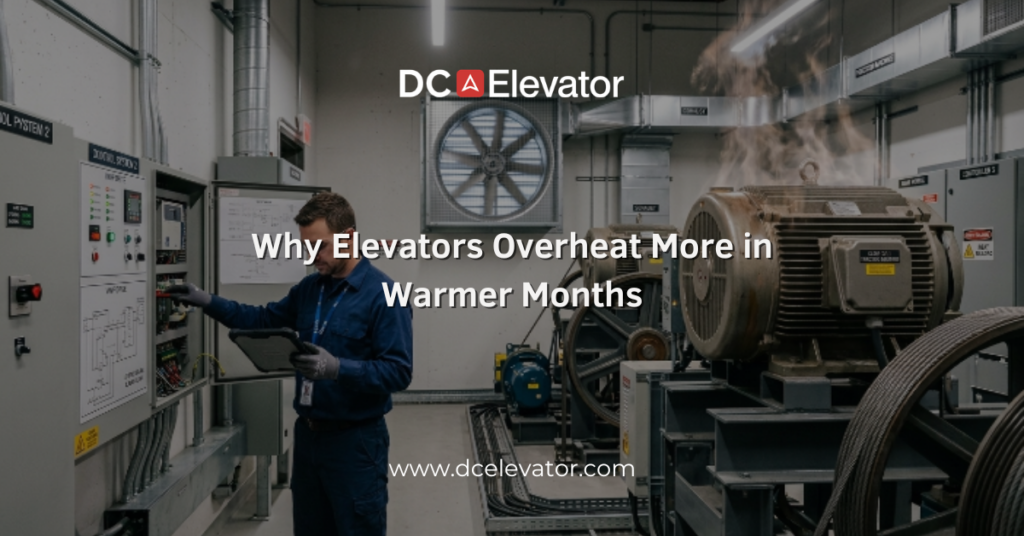
Machine rooms, hoistways, and control cabinets are especially vulnerable. Without proper airflow or cooling, temperatures can quickly exceed recommended limits, leading to overheating. This can cause safety systems to trigger automatic shutdowns to prevent damage, resulting in service interruptions.
Common Signs of Overheating
Facility managers often notice subtle warning signs before a full shutdown occurs. These may include:
-
Slower travel speeds or delayed response times
-
Frequent system resets or fault codes
-
Unusual smells, such as overheating electrical components
-
Increased noise from motors or fans
Ignoring these early indicators can lead to more serious issues, including component failure or costly repairs.
High-Risk Areas in Your Elevator System
Certain parts of an elevator system are more sensitive to heat than others:
Machine Rooms:
These spaces house critical equipment like motors and controllers. Poor ventilation or lack of cooling can cause temperatures to spike quickly.
Control Panels:
Electronic components are highly sensitive to heat. Excessive temperatures can reduce their lifespan and lead to unpredictable performance.
Hoistways:
Heat can accumulate in the shaft, especially in buildings exposed to direct sunlight or limited airflow. This can impact cables, rails, and overall system efficiency.
Real-World Challenges for Building Owners
During late spring and summer, buildings often experience higher occupancy levels and increased elevator usage. This added demand generates more heat, compounding the issue.
For example, a residential building during move-in season or a commercial property with heavy daily traffic may see elevators running continuously. Without proper cooling or maintenance, systems can overheat faster than expected, leading to downtime that disrupts tenants and operations.
Practical Solutions to Prevent Overheating
Preventing overheating starts with proactive planning and regular maintenance. Here are key steps building owners can take:
Improve Ventilation:
Ensure machine rooms and control spaces have proper airflow. Installing or upgrading ventilation systems can significantly reduce heat buildup.
Schedule Seasonal Maintenance:
Routine inspections before warmer months help identify potential issues early. Technicians can check cooling systems, clean components, and ensure everything is operating within safe temperature ranges.
Monitor System Performance:
Pay attention to changes in performance, especially during peak heat periods. Early intervention can prevent minor issues from escalating.
Upgrade Aging Components:
Older systems may not handle heat as efficiently as newer ones. Evaluating whether certain parts need replacement or modernization can improve overall reliability.
As temperatures rise, elevator systems face increased stress that can lead to overheating, reduced performance, and unexpected downtime. By understanding how heat impacts key components and recognizing early warning signs, building owners and facility managers can take proactive steps to protect their systems.
Improving ventilation, scheduling seasonal maintenance, and addressing aging equipment are all practical ways to keep elevators running smoothly throughout warmer months. These small actions can make a significant difference in reliability and long-term cost savings.
If your building’s elevators are showing signs of heat-related stress, now is the right time to act. Our team can evaluate your system and recommend solutions to improve performance and prevent costly disruptions. Contact us today to schedule a professional elevator assessment.