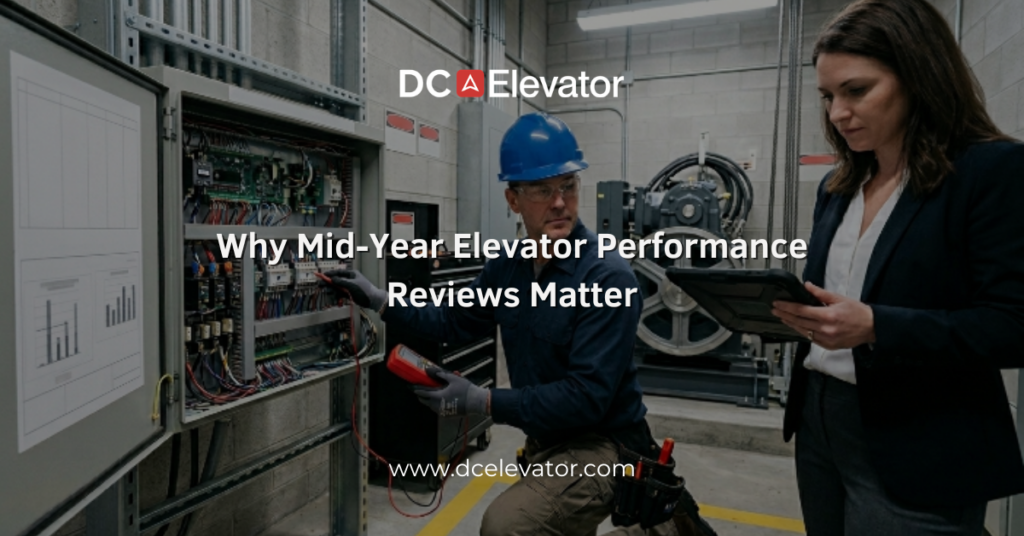
When was the last time you took a close look at how your elevators are performing—not just when something goes wrong, but as part of a planned review? Many property managers rely on routine maintenance alone, but by mid-year, elevators have already endured months of daily wear and changing usage patterns.
For facility managers and building owners, a mid-year elevator performance review is a practical way to catch small issues before they become major disruptions. With increased traffic, seasonal temperature changes, and ongoing mechanical stress, elevators can gradually lose efficiency without obvious warning signs. Taking time to evaluate performance halfway through the year helps ensure reliability, improve tenant satisfaction, and avoid costly repairs later on.
Why Mid-Year Reviews Are Critical
Elevators operate continuously, often with little downtime. Over the first half of the year, components such as door systems, brakes, and control mechanisms experience consistent use. Even with regular maintenance, performance can shift due to wear, environmental conditions, or increased demand.
A mid-year review acts as a checkpoint. Instead of waiting for year-end assessments or unexpected failures, property managers can proactively identify trends such as slower response times, unusual noises, or inconsistent leveling. Addressing these early helps maintain smooth operation throughout the rest of the year.
Identifying Hidden Performance Issues
Not all elevator problems are immediately noticeable. Some develop gradually and only become apparent when they start affecting tenants.
Common issues uncovered during mid-year reviews include:
-
Slight delays in door opening or closing
-
Minor leveling inconsistencies between floors
-
Increased vibration or noise during operation
-
Longer wait times during peak hours
While these may seem minor, they often indicate underlying wear or system inefficiencies. Left unaddressed, they can lead to more serious mechanical problems or unexpected downtime.
Evaluating Usage Trends and Demand
Building usage is not static. Tenant turnover, seasonal activity, and changes in occupancy can all affect how often elevators are used.
A mid-year performance review provides an opportunity to analyze:
-
Daily trip counts and peak usage times
-
Changes in tenant behavior or building occupancy
-
Increased demand during certain hours or events
Understanding these trends allows property managers to adjust maintenance schedules or operational strategies. For example, buildings experiencing higher traffic may require more frequent servicing to keep up with demand.
Improving Efficiency and Tenant Experience
Elevator performance plays a direct role in tenant satisfaction. Slow response times, frequent stops, or inconsistent operation can quickly lead to complaints.
By conducting a mid-year review, property managers can fine-tune system performance to improve:
-
Travel speed and response time
-
Ride comfort and consistency
-
Reliability during peak hours
Even small adjustments can make a noticeable difference in how tenants experience the building on a daily basis.
Planning Ahead for Repairs or Upgrades
One of the biggest advantages of a mid-year review is the ability to plan ahead. Instead of reacting to breakdowns, property managers can budget and schedule repairs or upgrades more effectively.
If certain components are nearing the end of their lifespan, addressing them during a planned service window is far more efficient than dealing with emergency repairs. In some cases, a performance review may also highlight opportunities for modernization that can improve long-term reliability and efficiency.
Mid-year elevator performance reviews are more than just a routine check—they are a proactive strategy for maintaining reliability, improving efficiency, and avoiding unexpected disruptions. By identifying early signs of wear, evaluating usage trends, and planning ahead, property managers can keep their systems running smoothly year-round.
If your building hasn’t had a performance review this year, now is the perfect time to take action. Our team can assess your elevator system, identify potential concerns, and recommend practical solutions to keep everything operating at its best. Contact us today to schedule a mid-year elevator performance evaluation and stay ahead of potential issues.