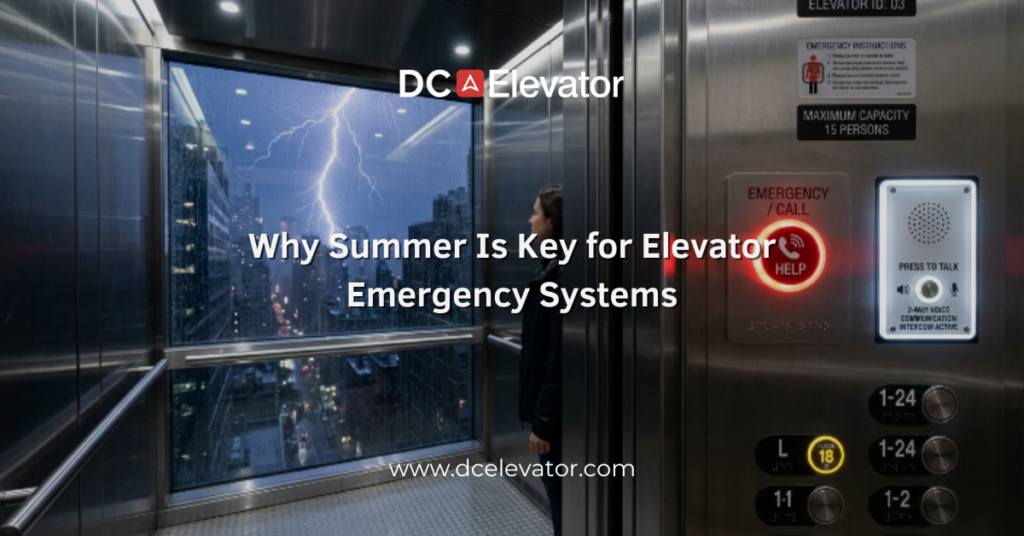
What happens if someone becomes trapped in an elevator during a summer power outage or severe storm? In many buildings, elevator emergency communication systems are the first line of support during these situations. Yet, these systems are often overlooked until an emergency occurs.
Summer brings increased electrical demand, stronger storms, and higher building traffic in hotels, offices, residential properties, and healthcare facilities. These seasonal changes can place added pressure on elevator systems and expose weaknesses in emergency communication equipment. For property managers and facility teams, ensuring that elevator phones, alarms, and communication devices function properly is essential for occupant safety and code compliance.
A proactive review before peak summer conditions can help reduce risks, improve response times, and ensure elevators remain dependable when they are needed most.
Why Emergency Communication Systems Matter
Elevator emergency communication systems allow passengers to contact building staff or emergency responders if an elevator becomes stuck or experiences a malfunction. These systems typically include emergency phones, intercoms, alarm buttons, and monitoring connections.
When communication equipment fails, trapped passengers may experience confusion, panic, or delayed assistance. In busy commercial or residential buildings, even a short communication failure can create serious safety concerns and operational disruptions.
Summer weather conditions can increase the likelihood of power fluctuations and temporary service interruptions, making dependable communication systems even more important during this time of year.
Common Summer-Related Communication Problems
Higher temperatures and seasonal storms can affect electronic components inside elevator systems. Moisture from humidity or heavy rain may impact wiring connections, while heat buildup in machine rooms can affect communication hardware performance.
Property managers may also encounter issues such as:
- Static or poor audio quality during emergency calls
- Outdated phone systems no longer compatible with current networks
- Battery backup failures during power outages
- Damaged wiring caused by moisture or aging components
- Alarm systems that fail to respond consistently
These issues may go unnoticed during routine elevator use but can quickly become serious during emergencies.
Increased Building Traffic Adds More Pressure
Summer often brings increased occupancy and visitor traffic. Hotels experience higher guest volumes, residential properties see more move-ins and travel activity, and office buildings may host seasonal events or contractors.
With elevators operating more frequently, the chances of service interruptions naturally increase. If an elevator unexpectedly shuts down during a busy period, reliable emergency communication becomes critical for maintaining occupant confidence and building safety.
Routine inspections can help identify worn communication equipment before problems escalate during peak usage periods.
The Value of Preventive Testing and Inspections
A seasonal elevator inspection should include testing all emergency communication features to confirm they operate properly under real conditions. This includes checking audio clarity, verifying monitoring connections, inspecting backup power systems, and reviewing overall code compliance.
In some older buildings, modernization may also be necessary. Replacing outdated communication devices with newer systems can improve reliability and help ensure compatibility with current communication networks and safety requirements.
Building owners who address these concerns early often avoid unexpected downtime, emergency repair costs, and tenant complaints later in the season.
Summer conditions can place additional stress on elevator systems, making emergency communication reliability more important than ever. From power interruptions to increased building traffic, several seasonal factors can expose weaknesses in outdated or poorly maintained communication equipment.
By scheduling routine inspections and testing communication systems before peak summer activity begins, property managers can improve passenger safety, reduce operational risks, and maintain confidence in their building’s elevator performance.
If your elevator’s emergency communication system hasn’t been inspected recently, our team can help evaluate its condition and recommend practical solutions to improve reliability and safety. Contact us today to schedule an elevator communication system assessment before summer demands increase.